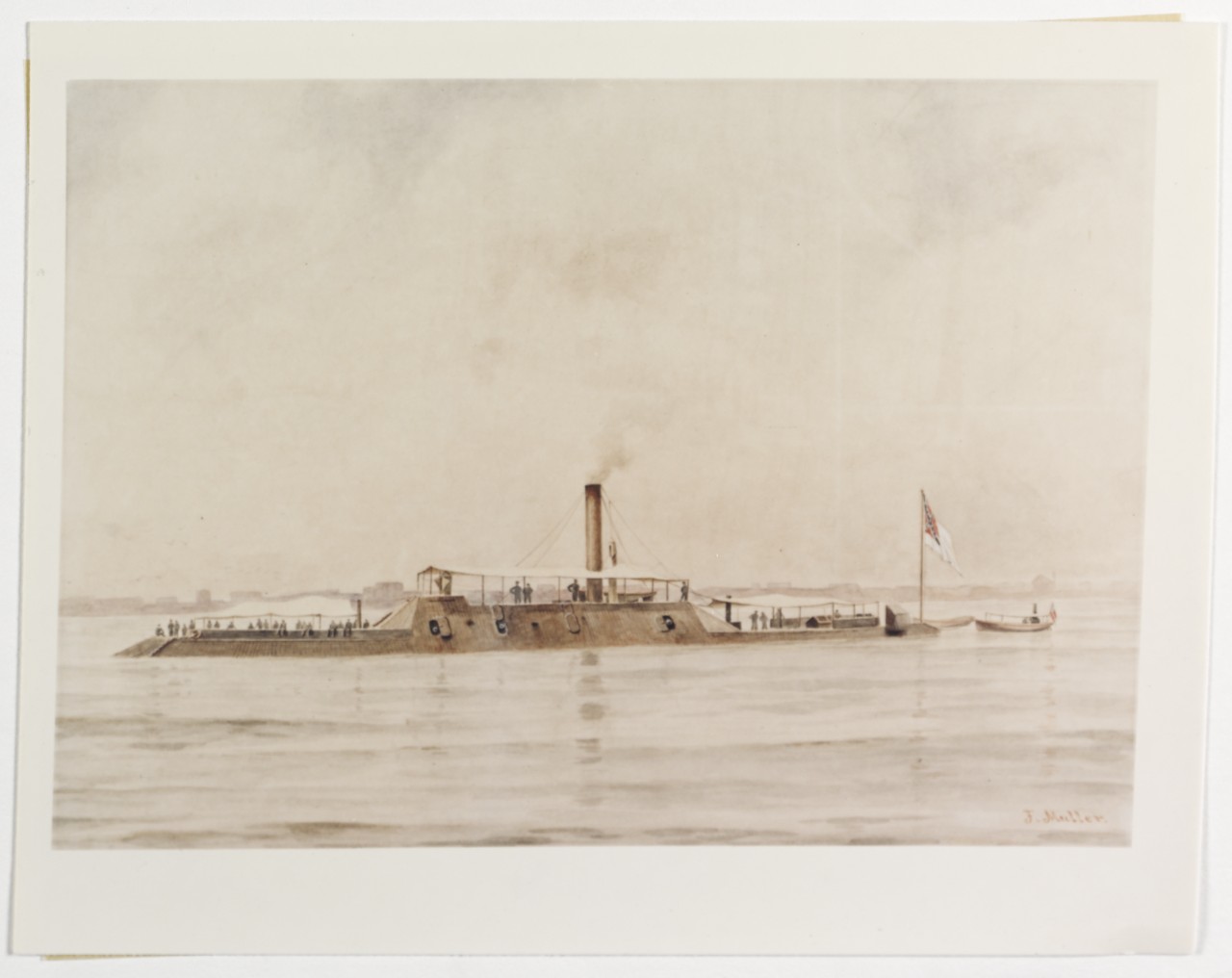
Alabama Ironclads
Presenter:
John V. Quarstein
Director emeritus of the USS Monitor Center
About the lecture:
After New Orleans fell to the Union, Mobile became the Confederacy’s most important Gulf Coast blockade-running port. Although masonry forts guarded the bay’s entrance, ironclads were needed to defend the harbor.
Alabama’s resources made Selma, Montgomery, and Mobile centers of ironclad construction. The first, CSS Baltic, was poorly designed and later stripped for armor. Two floating batteries — CSS Huntsville and CSS Tuscaloosa — were completed, with five more ironclads underway.
The most effective was the ram CSS Tennessee, one of the South’s best ironclads, with heavy armor, strong guns, and a top speed of five knots. Still too slow, Tennessee alone faced Admiral David G. Farragut’s attack on Mobile Bay on August 5, 1864, and was captured. All Alabama ironclads were surrendered in May 1865.

Registration Information
Advance registration is required whether you attend the lecture in person or online.
In person
Free for Museum Members.
$1 for guests.
Virtual
This lecture is livestreamed
and free to watch online.
Order signed copies of
John Quarstein’s books!
John Quarstein’s books are available for purchase in the Museum Gift shop or online. Members receive 10% OFF Gift Shop purchases with a code. Email Membership to get your Member discount code. Not a member? Become one today.

Contact Us
For additional assistance, questions, or support:
Guest Relations
[email protected]
(757) 596-2222
Image credit: CSS Tennessee. F. Muller, artist. Courtesy Naval History and Heritage Command, NH 83805-KN.