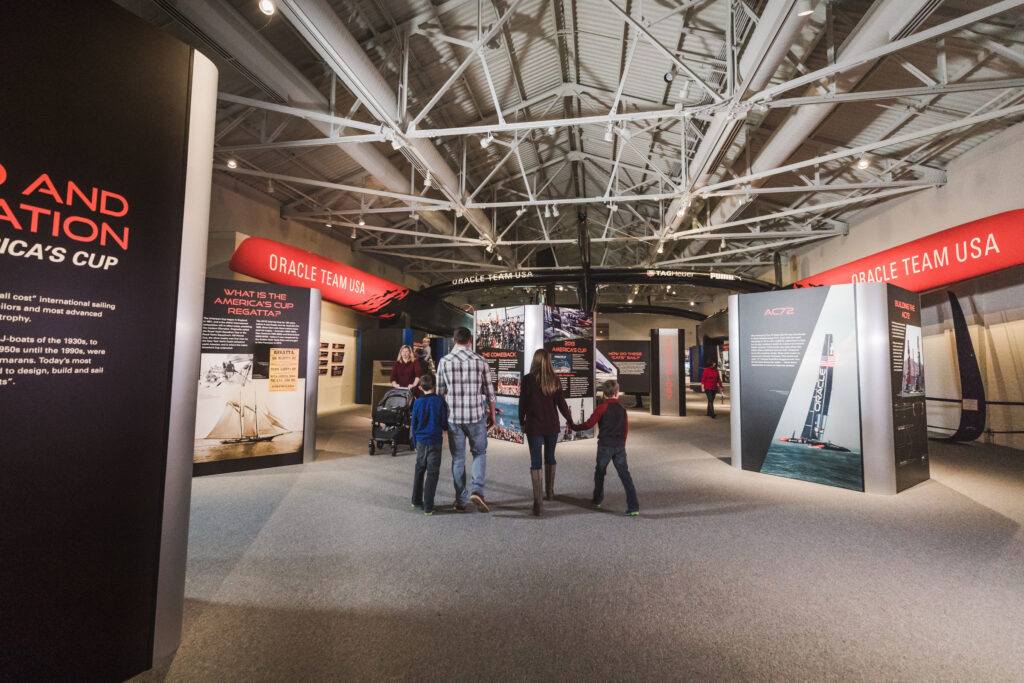
The Mariners’ Museum and Park is full of incredible galleries — from artifacts that bring history and war stories to life, to vessels and objects from around the world. There’s truly something for everyone to enjoy. During my internship here this past summer, I had the privilege of exploring each gallery in depth. But one in particular captured my attention and kept it — the Speed and Innovation in The America’s Cup gallery, home to the story of the America’s Cup and part of the winning 2013 America’s Cup catamaran.
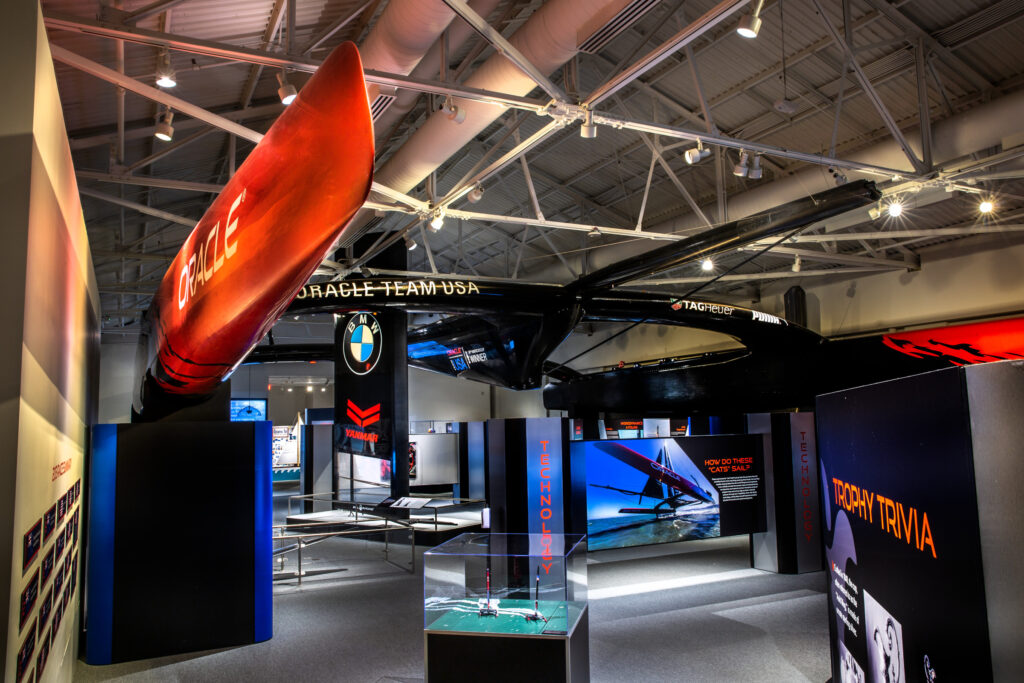
At first, my background in water sports naturally drew me to this exhibit and, of course, the giant boat that greets you when you walk in. I thought I knew a fair amount about sailing, but I quickly realized there was a whole world of innovation, athleticism, and engineering I had never imagined to be involved in this sport.
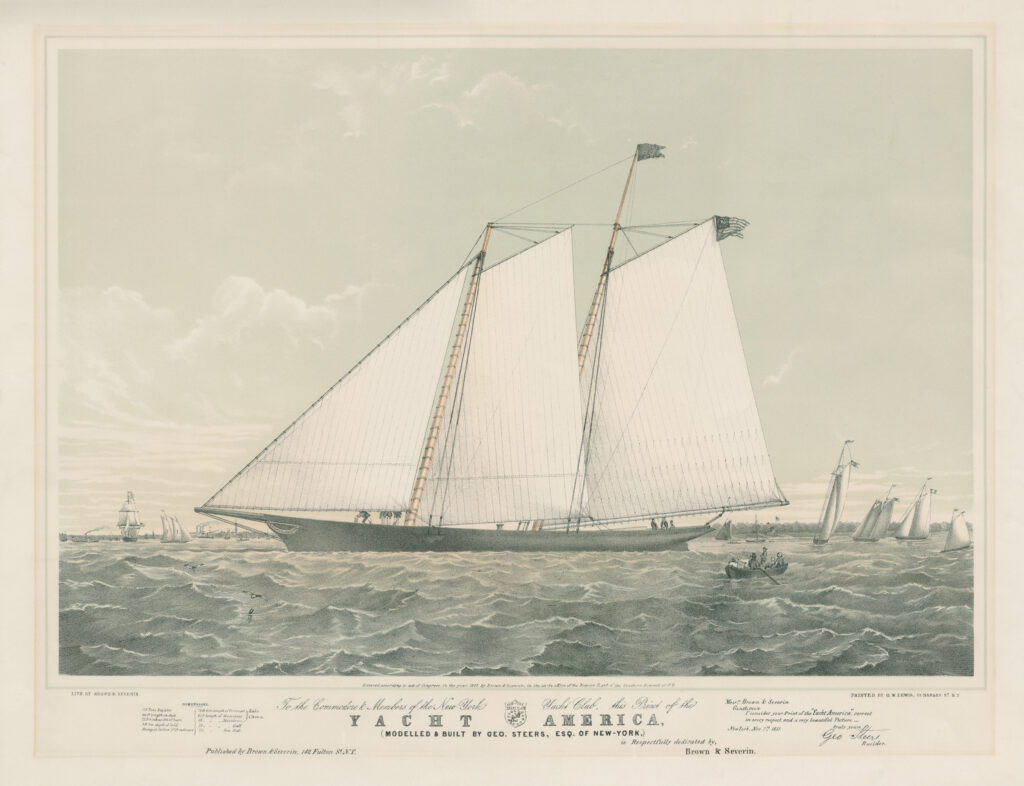
I learned that the America’s Cup isn’t just any race — it’s the world’s oldest international sporting competition, predating the modern Olympics. Started in 1851, the America’s Cup carries the name of the legendary yacht that started it all — America, built by George Steers, a New York boatbuilder. Originally called the Royal Yacht Squadron Cup or the Royal Yacht Squadron’s 100 Pound Cup, the race began in England in 1851 and has evolved into a widely loved and advanced sport.
The exhibit brings this legacy to life in spectacular detail, but it was the 2013 America’s Cup story that really captivated me. In 2013, the Oracle Team USA staged what has been called “the greatest comeback in sports history,” overcoming an 8–1 deficit to beat Emirates Team New Zealand 9–8. And the very boat that carried them to victory — the AC72 catamaran — towers above you in the gallery. It’s the largest boat in the Museum’s Collection, and seeing it up close makes you appreciate just how massive and complex these vessels are.
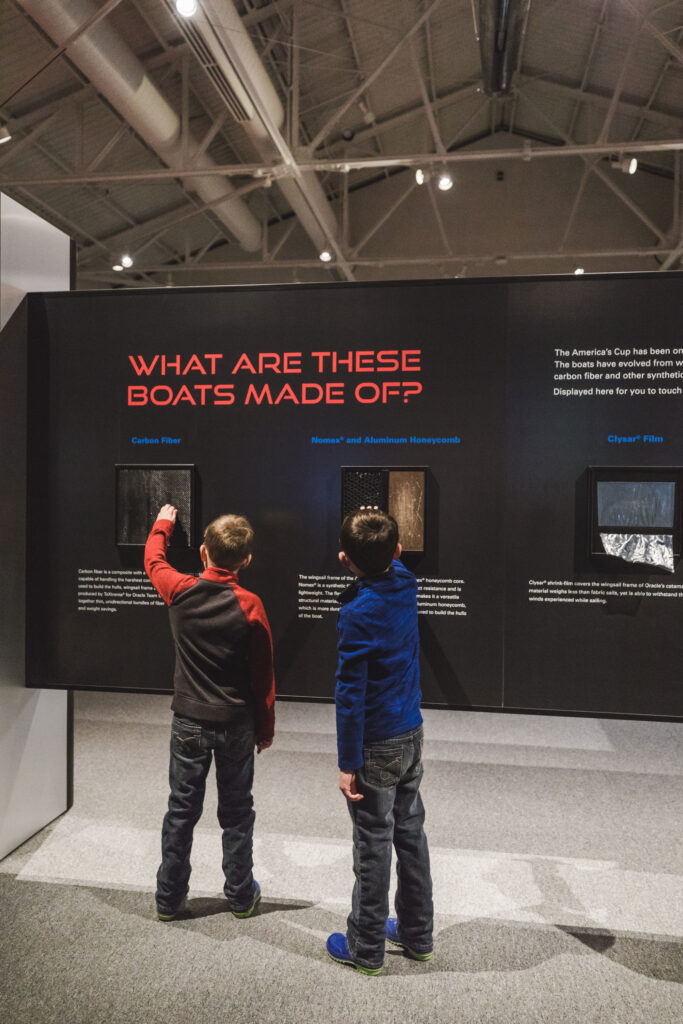
Walking through the gallery, you don’t just learn about the catamarans — you experience the sport from every angle. You have the chance to learn how these high-tech catamarans “fly” above the water on hydrofoils, reaching speeds up to three times faster than the wind. You can touch materials like carbon fiber and Clysar film that keep the boats strong yet feather-light. You can step onto the same kind of netting the crew stood on during races, and even test your endurance on an arm bike like the grinders use to power the boat’s hydraulic systems.


The exhibit also dives into the crew’s world. Each of the 11 sailors has a specialized role — from the skipper steering the course, to the tactician reading wind and currents, to the grinders generating the hydraulic pressure that controls the sails and foils, and more. Their training regimen is as intense as any elite athlete’s: two to five hours a day of cardio, boxing, weightlifting, swimming, agility work, and/or mental exercises to sharpen decision-making under pressure.
And then there’s the technology — a blend of hydrodynamics, aerodynamics, materials science, and pure innovation. The AC72’s wing sails work like airplane wings, generating lift to push the boat faster than the wind. Hydrofoils lift the hulls completely out of the water to eliminate drag. Every component is a calculated balance of strength, lightness, and precision.
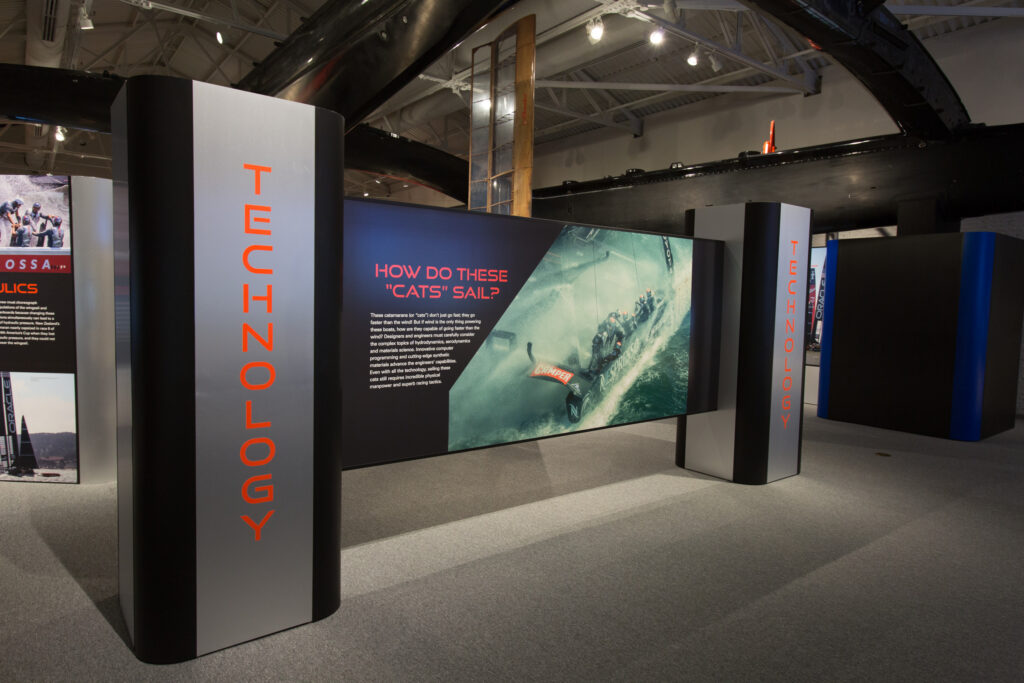
What makes the Speed and Innovation in The America’s Cup gallery so special is that it doesn’t just show you a boat — it immerses you in a story of history, human endurance, and engineering genius. Whether you’re a sailor, a sports fan, a tech enthusiast, or just curious, you’ll leave with a new appreciation for what it takes to race — and win — the world’s oldest international sporting competition.