Are you wild about wildlife? Do you love Mariners’ Park and want to learn more about our exciting WILD grant? Then this blog is the right place for you!
Welcome… to WILD Wednesday! (cue the Jurassic Park theme music).
In this monthly WILD Wednesday blog series, readers will unearth news and highlights about The Mariners’ Museum and Park’s National Fish and Wildlife Foundation (NFWF) WILD grant. The Park Team will write monthly blogs until late spring 2027. Each month, there will be a unique focus highlighting native or invasive plants, Park wildlife, updates on the grant progress, partner connections, or a mash of all of those topics! At the end of the project, we will share big wins from the grant period.
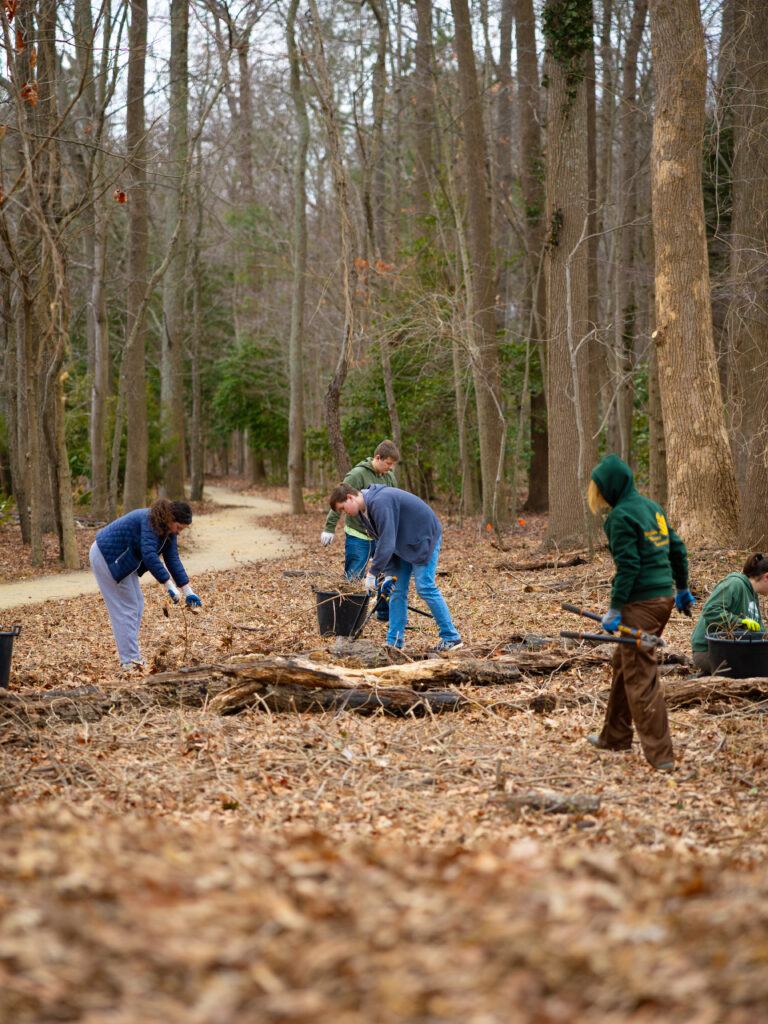
The grant work is centered on removing invasive plant species and strategically replanting in some locations with native plants at multiple sites across our 550-acre Park. Removing long-standing invasives and replanting or encouraging native plants to thrive benefits local wildlife by creating suitable habitats and helps the Park Team make better land and wildlife management decisions. Additionally, the grant assists select partners by providing outreach materials to promote community conservation and education.
With many conservation-related celebrations this month, including Earth Day and Arbor Day, this is a perfect opportunity to learn more about ecological efforts underway in Mariners’ Park. Who knows — maybe you, dear reader, will be inspired to plant your own native tree or start a garden!
Native, non-native… what?
I want to clarify some terms that I may be using, and probably others I will use when talking about this subject.
Native: Native species (all living organisms, but let’s just talk about plants for now) occur naturally in a habitat without human intervention or introduction. Famous Virginia plant examples include Butterfly Weed (Asclepias tuberosa) and Sweetbay magnolia (Magnolia virginiana).
Native, aggressive: There are some native plants that some folks deem as “invasive,” but in reality, they are native plants that are aggressive or fast-growing. Well-known plant examples are anything in the mint family, like varieties of bee balm (Monarda) and Black-Eyed Susans (Rudbeckia hirta).
Non-native: Non-native plants are generally introduced species and may or may not prevent the growth of native plants. Some non-natives are not particularly aggressive. Others are very harmful and, when in the right situation, can grow quickly and take over, such as Japanese stilt grass (Microstegium vimineum) and Chinese Privet (Ligustrum sinense). Aggressive or not, they usually do not benefit the ecosystem and can actively harm it.
Naturalized: A naturalized species is something that has been in a place for a while, and someone might consider it to be native since the plant or animal reproduces successfully on its own (largely without the help of humans). Ultimately, these species have come from other countries in the recent past. A famous plant example is the dandelion (Taraxacum).
Addressing misconceptions
When people mention removing plants, such as English ivy (Hedera helix), periwinkle (Catharanthus roseus), or Bradford pear trees (Pyrus calleryana), and many more invasive species, some folks have questions — lots of questions! Why remove the lush greenery? Is the groundcover not helping with erosion? Why cut down trees that have been here for years? Will it affect the wildlife? Is it really hurting the native ecosystem?
These questions, and more, are not off-base. It’s always nice to know we have champions of the Park in our community to bring up their concerns. Let’s address some of these questions. Yes, greenery is something everyone wants to encourage in a park. It is also vital to have good ground cover for erosion management. The Park welcomes ~250,000 annual visitors, so erosion control is important. Trees of all kinds can certainly provide a place for certain birds to nest or bugs to live, too. However, at the end of the day, the kind of plants matters a great deal when it comes to the whole ecological picture.
Humans have introduced invasive species around the world over the years — and the Peninsula is not excluded from this practice. The reality is that people 100 years ago or more liked the aesthetics or practical qualities of some of these non-natives. They likely didn’t know the broader implications of introducing new species (e.g., disease, pests, rapid growth, etc.).
Here, in Southeastern Virginia, we have a unique climate, soil type, and geological features that support our ecosystems. In an ecosystem, everything is connected. Living things within an ecosystem rely on other living and non-living things within the system to survive and thrive. As in any system, there are also limited resources. When I say resources, I mean the physical requirements for life to thrive and survive. Resources for a plant, for example, are things such as light, nutrients/food, water, and space.
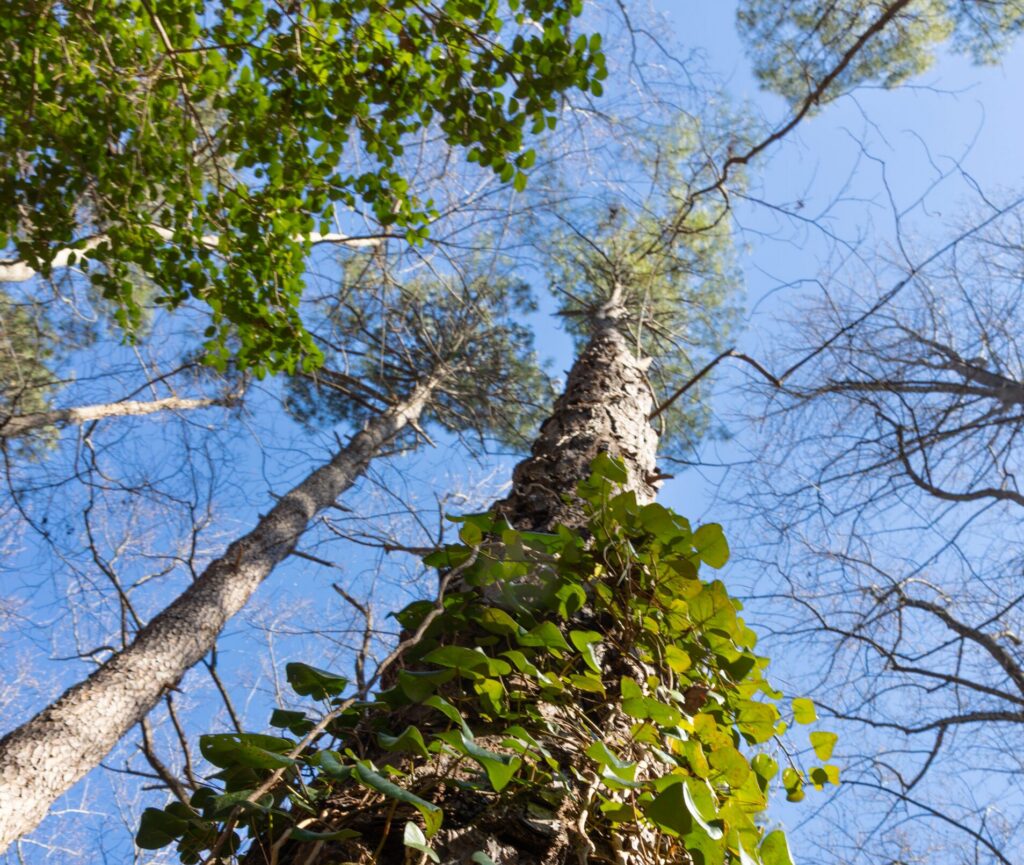
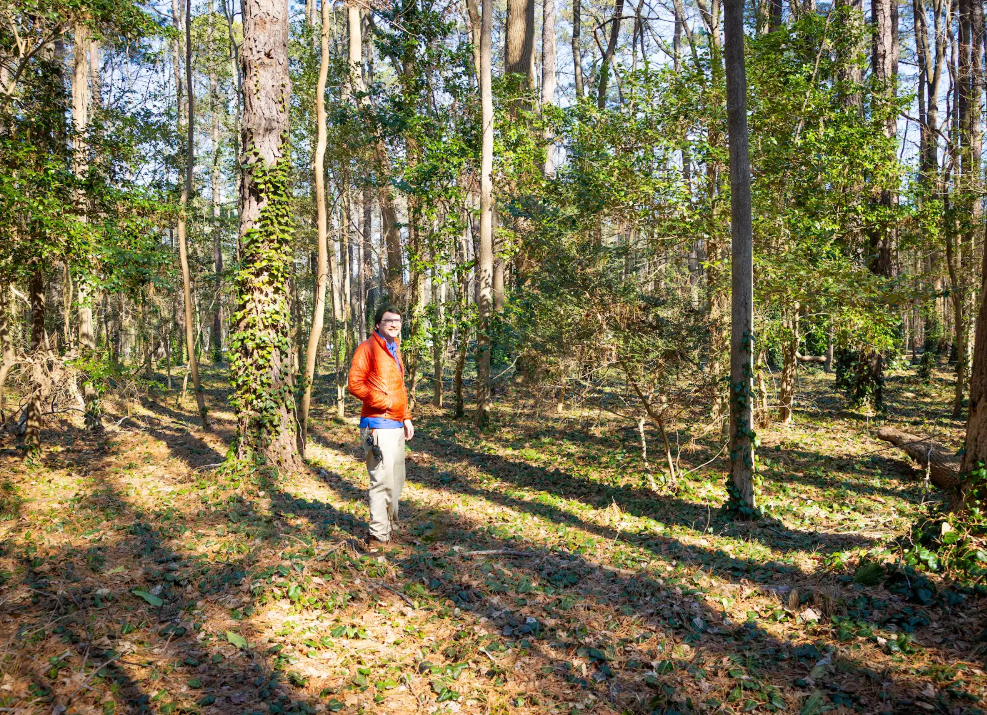
All living things compete for resources, and some are more successful than others. In an ecosystem where there are non-native and highly invasive plant species, such as English ivy or Japanese wisteria (Wisteria floribunda), there is a strain on these limited resources for the native plants. If the wisteria is taking up most of the light, nutrients, space, and water, then what is left for the native plants, like Virginia Creeper (Parthenocissus quinquefolia)? Not much. Not only are these plants competing for resources, but these invasives can also damage the native plants. For example, English Ivy climbs up trees, like most vines, and along the way, the vines loosen the tree bark, allowing moisture to get under the bark. Moisture can lead to rot, death, and other issues.
In any ecosystem, even the native species are competing with one another for those same resources. An opening occurs in the tree canopy due to a fallen older tree, and young trees or other plants start to grow where there was no light before. Where there was expected competition between native species, it has now become an unfair advantage to invasive plants. There are essentially no checks and balances for the non-native plants (most likely, unless a human removes them).
But wait — are there checks and balances in nature? The short answer is a resounding yes! Nature is awe-inspiring, and in my opinion, extremely thorough. Where you find a native plant or animal, there is often something it’s coevolved with that helps prevent the species from getting out of control. That could be a fungus, a predatory insect, or anything in between. Nature is so cool!
What has the Park Team accomplished thus far?
These are quick stats to date:
- Mariners’ staff contributed 670+ hours toward this project already
- 141 volunteers assisted in the removal of invasives
- Of the six sites, three have 100% of invasive removal completed
- Another larger site has between 20-40% of the target invasives removed
- Invasives at these sites include: English ivy, Chinese privet, mimosa tree (Persian silk tree), Japanese honeysuckle, Japanese wisteria, and periwinkle (vinka)
How can the community help?
Community members are always looking for ways to get involved with our special projects, such as WILD. Here are the main ways you can help!
Volunteering
We need your help! Volunteer opportunities for WILD will come up throughout the year. These volunteer days are usually half days (between 2-3 hours) and largely involve pulling our targeted invasives or other related activities. We are slowing down in the warmer months, but will pick up more in the fall. If you are interested in volunteering on-site with us, please contact Volunteer and Internship Manager Beth Heaton at [email protected]. Please, no phone calls.
City Nature Challenge
Between April 24 – 27, 2026, the City of Newport News will participate in a worldwide bioblitz event called the City Nature Challenge. Anyone with iNaturalist can participate! All you have to do during the bioblitz days is go around the City, including Mariners’ Park, recording wild plants and animals you see on iNaturalist (avoid cultivated or domesticated items). This will help us understand our native plants and animals living and thriving in the Park! Species information collected on iNaturalist helps to inform our species in the Park list and helps to grow the Mariners’ Park Research Initiative.
Sources:
https://www.chesapeakebay.net/discover/field-guide/entry/english-ivy
https://www.nps.gov/subjects/invasive/what-are-invasive-species.htm