My Cart
  • The Bronze Door Society Paves the Way for New Possibilities at the Museum!

    • Conservation
    • Science
    • Technology

    The new Zeiss Axioscope 5 will allow conservators and scientists to view samples at high magnification with polarized light, darkfield and brightfield illumination, and ultraviolet visible fluorescence. These analytical features, in conjunction with our new workstation, camera, and imaging software, will allow us to view, capture, and share information that we previously could not attain in-house.

  • Agents of Decay: they’re everywhere!

    • Conservation

    The agents range from everyday environmental issues to unlikely, but devastating, events. It’s important to remember, and you’ll see it as we go through the list, that often these agents work together.

  • Hampton Roads City Nature Challenge: A How-to guide

    • Mariners' Park
    • Wildlife

    Participate in the City Nature Challenge and help us identify wildlife and plants who call Mariners' Park home!

  • Biscuits Off the Beaten Path

    • Collections
    • Cultural Heritage

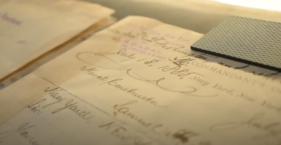
    I recently had cause to photograph some of our ephemera (a fancy word for printed memorabilia) from The Baltimore Steam Packet Company. You may be more familiar with their moniker “Old Bay Line.” One of the items I digitized was the menu for the Baltimore Steam Packet Company’s centennial celebration dinner on May 23, 1940.

  • Juneteenth, What’s it all about?

    • Black History
    • Cultural Heritage

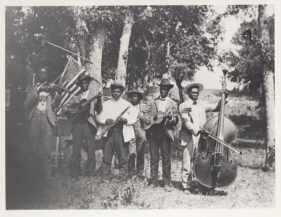
    Tomorrow marks the 156th anniversary of Juneteenth, the oldest commemoration marking the end of slavery in the United States of America. Frederick Douglass, a former enslaved person himself, even referred to it as the second Independence Day. Also known as Freedom Day, Jubilee Day, Liberation Day, and Emancipation Day, the word “Juneteenth” is an amalgamation of “June” and the “19th.”. Let’s turn back the hands of time for a moment and look at what happened 156 years ago.

  • Noone asked me…

    • Collections

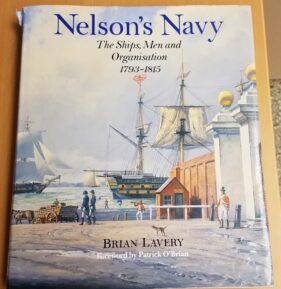
    An annotated list of the maritime history books that I have found myself pulling off the shelf (again and again) for reference during my twenty-year tenure at The Mariners’ Museum and Park.

  • Opening Day: What The Mariners’ Museum looked like in the 1930s

    • Collections

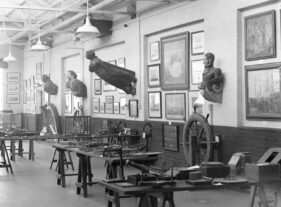
    Today, The Mariners’ Museum and Park’s exhibition space is roughly 90,000 square feet; but when the Museum opened to the public in November 1933, there was only a little over 12,000 square feet of gallery space.

Scroll to Top