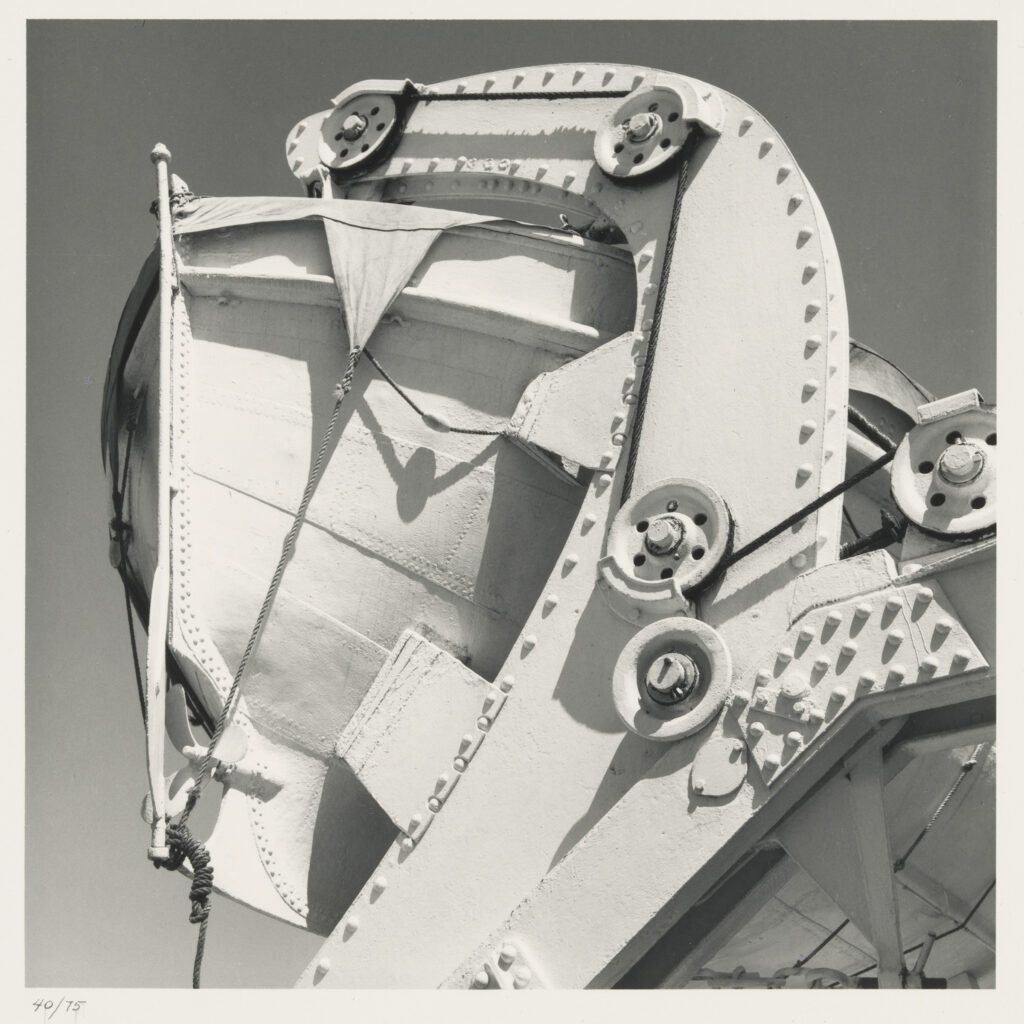
One of the key principles of photography is the way a photographer frames their subject. An intriguing facial expression can easily be misinterpreted if the cause for it has been cropped out of the image. However, carefully framing a subject can also help to simplify the creator’s intended message.
In this case, a lifeboat on a passenger ship has been turned into an abstraction of shapes and shadows. Otherwise, this is a straight photograph; the image is not manipulated in any other way.
This photograph was taken in 1958, during the post-World War II era of modern photography. Other modernist photographers, such as Harry Callahan, Minor White, and Edward Weston, were utilizing the medium’s qualities of crisp optics and full tonal range to deliver their imagery.
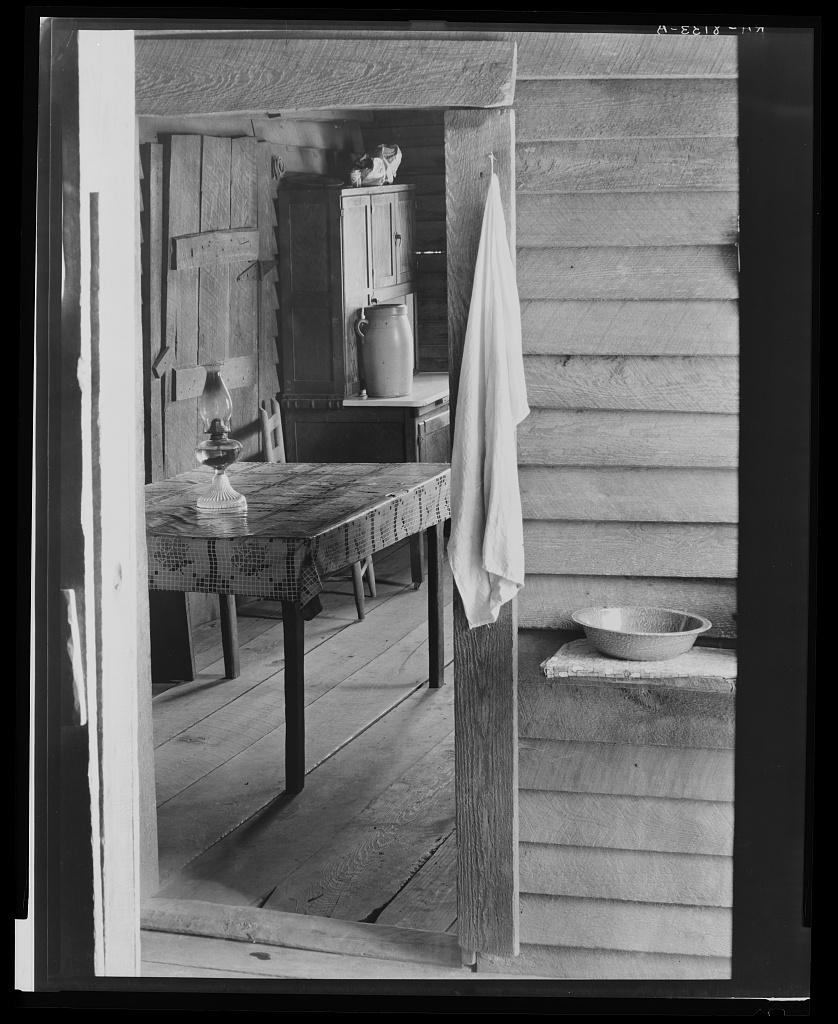
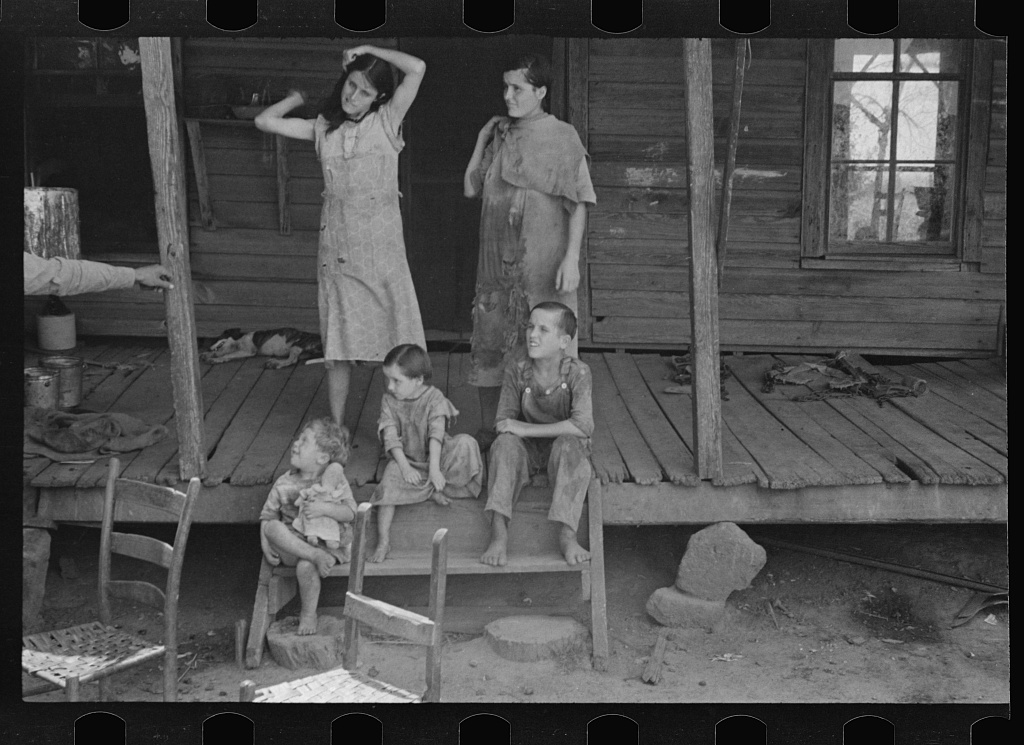
Walker Evans (1903-1975) was best known for his work during the 1930s documenting rural America for the Farm Security Administration. Later in that decade, he travelled through the South “with his friend, the writer James Agee, who had been assigned to write an article on tenant farmers by Fortune magazine; Evans was to be the photographer.” The project focused on three families in Alabama and culminated in the publication of Let Us Now Praise Famous Men in 1941. Evans’ direct, unapologetic approach to these families and their lifestyles appeared to sum up the “whole tragedy of the Great Depression.” [1]
After years of working on assignments for Time and Fortune magazines, Evans was awarded a new title at Fortune. As Special Photographic Editor (1948-1965), he was able to create portfolios of his choosing and also design the magazine layout. [3]
Creative control to this degree was unheard of at this time. In summing up this extraordinary opportunity, The Metropolitan Museum of Art said, “Using the standard journalistic picture-story format, Evans combined his interest in words and pictures and created a multidisciplinary narrative of unusually high quality.”
Lifeboat was part of a 1958 spread [4] in Architectural Forum, a fitting example of Evans’ overall vision for the published work.
Sources:
- “Walker Evans (1903–1975).” The Metropolitan Museum of Art online. Accessed October 23, 2025. https://www.metmuseum.org/essays/walker-evans-1903-1975.
- “Farm Security Administration/Office of War Information Black-and-White Negatives.” Library of Congress online. Prints & Photographs Division, FSA/OWI Collection. Accessed March 4, 2025. http://hdl.loc.gov/loc.pnp/pp.fsaowi
- “Walker Evans Timeline.” Florence Griswold Museum. Accessed October 23, 2025. https://florencegriswoldmuseum.org/exhibitions/online/the-exacting-eye-of-walker-evans/timeline/.
- Architectural Forum magazine. October 1958. Accessed March 5, 2025. https://usmodernist.org/AF/AF-1958-10.pdf