Hello! My name is Alva Brookshire, and I am the summer Conservation Intern at The Mariners’ Museum and Park. My studies at neighboring Christopher Newport University (CNU) are in Art History with the intention of studying conservation at a graduate level. I began to learn about conservation when I started volunteering with the Conservation Department at the Museum several years before my official internship started. Over the course of the past nine weeks, I had the pleasure of working on three different objects.
Tea Saucer Tape Removal
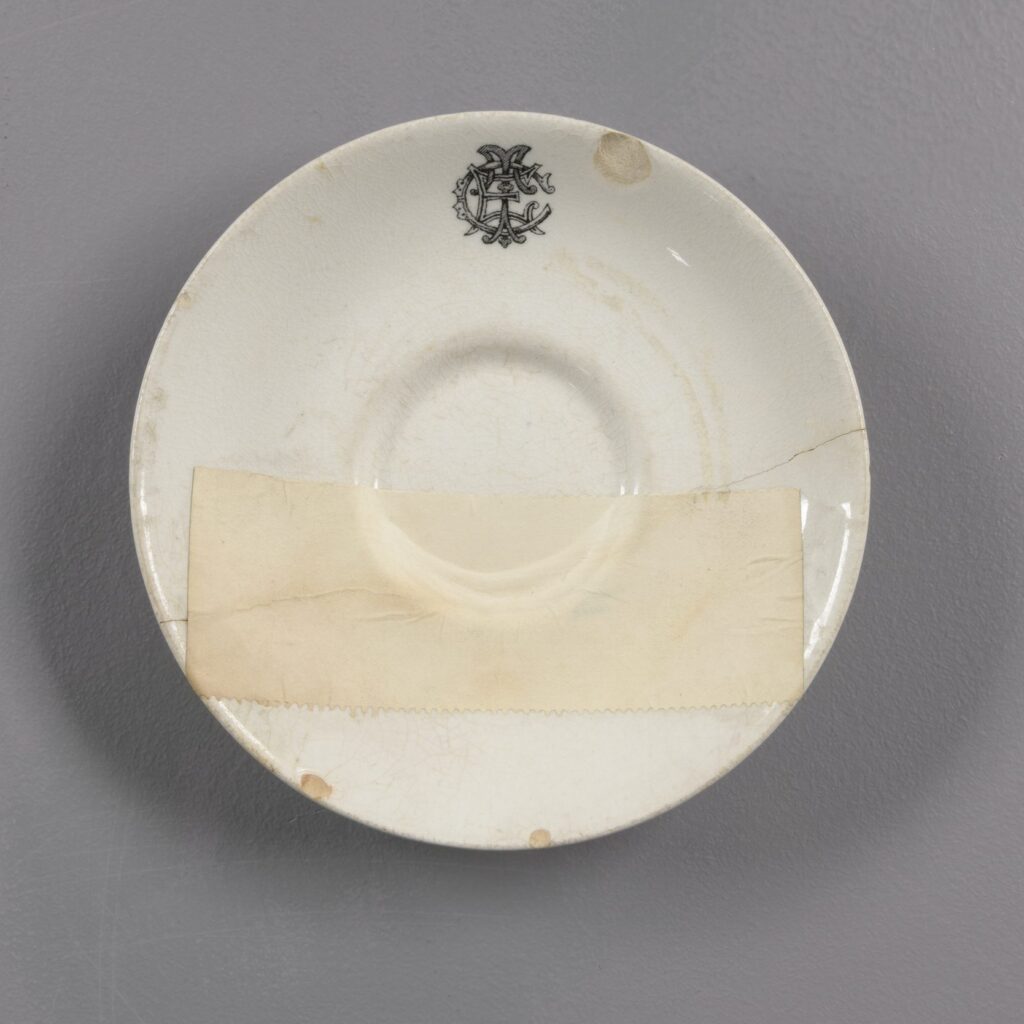
The first object I worked on was a tea saucer from the S.S Brittania, a cable laying ship which operated from the 1890s to the 1910s. As you can probably tell, this object needed some attention due to the… unconventional method of repair that was employed in its past. Tape isn’t ideal for repairing ceramics, and this old repair was distracting and wasn’t very stable. Underneath the tape was a discolored mend made with an unknown adhesive. Given this, it was my top priority to undo it for the health and interpretation of the plate.
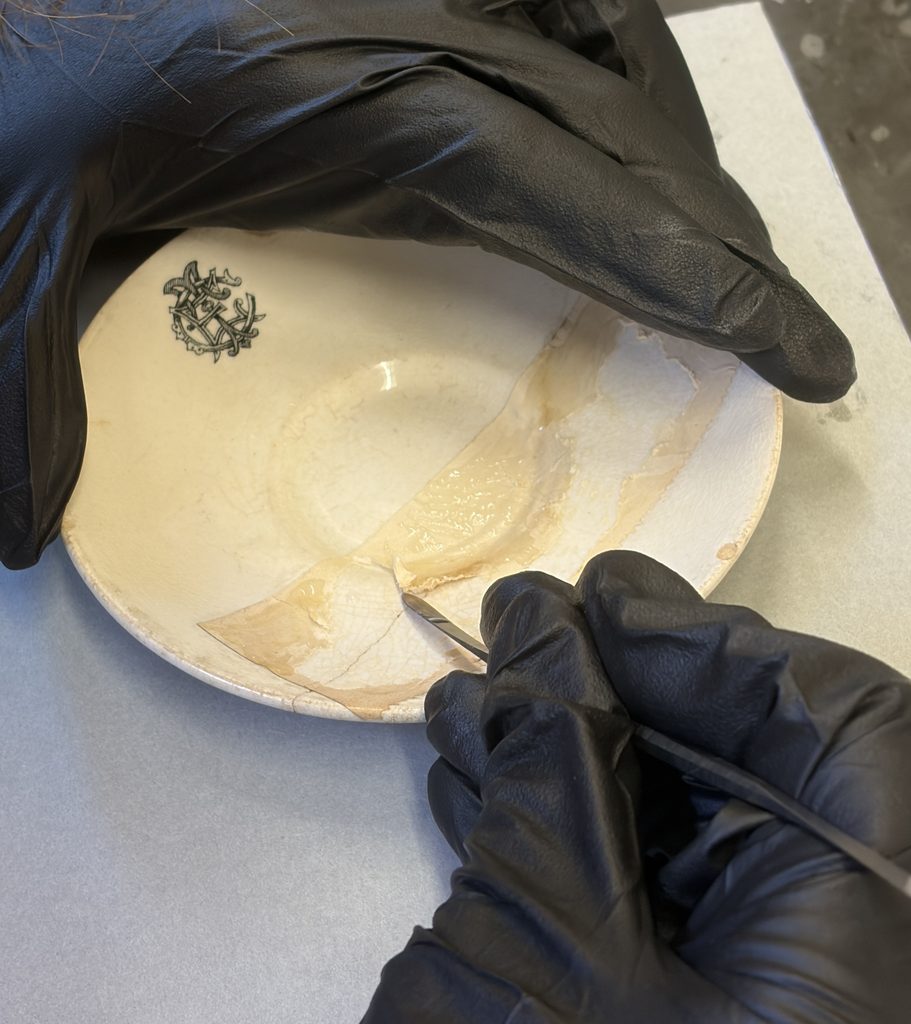
The tape removal was the easiest part of this process. The old paper tape was very easy to lift off the surface once I moistened the paper with a gel called methyl cellulose. Unfortunately, undoing the underlying adhesive mend that was still holding the plate together wasn’t as simple. There wasn’t any adhesive that was visible for me to sample, so I made an educated guess based on common adhesives that were used at the time and applied acetone to the mend to see if it would soften the adhesive. To my surprise, it worked! The plate is now in two fragments and will be joined with a stable, conservation-approved adhesive.
Cleaning Up a Canoe
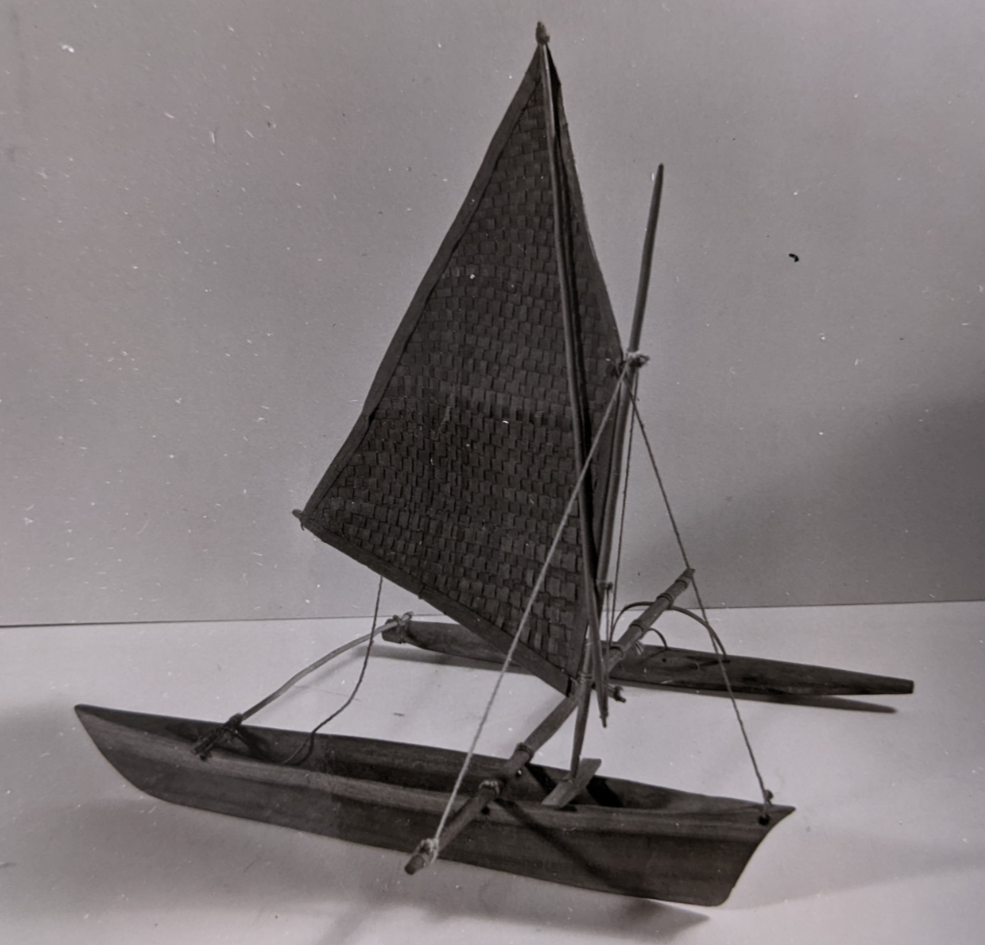
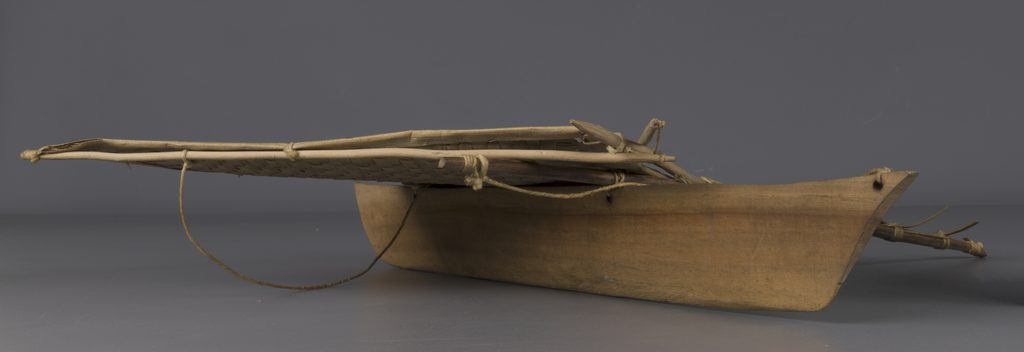
The second object was a unique model of a Polynesian sailing canoe, the origin of which may be the island of Bora Bora. This model is an important part of our collection because it is one of the only representations of this kind of craft we have! The model had acquired a pretty thick layer of dust over the years, so my first task was surface cleaning. This involved removing loose grime with a vacuum and air puffer followed by cosmetic sponges.
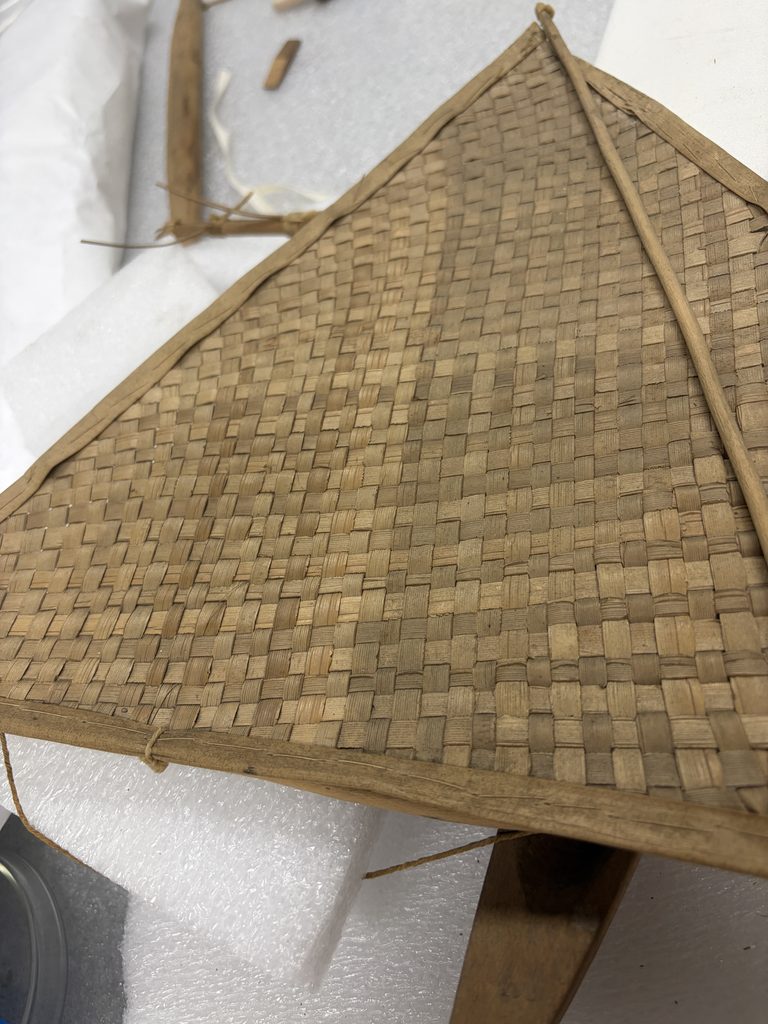
The cleaning process was very satisfying to watch and see my progress unfold before me with a very stark cleaning line. During this cleaning, I found a mysterious adhesive at the top corner of the sail. Working with Assistant Research Scientist Brian Kim, I got to perform Attenuated Total Reflectance Fourier-Transform Spectroscopy (ATR-FTIR) on a sample of the adhesive to determine its composition. It was identified as cellulose nitrate, indicating that it was a past repair rather than an original part of the model. Since materials like cellulose nitrate can cause damage to the model when they begin to deteriorate, I decided to remove this adhesive mechanically with a scalpel and a pair of tweezers. The model looked remarkably cleaner after all of this was completed.
Spine and Cover Repair
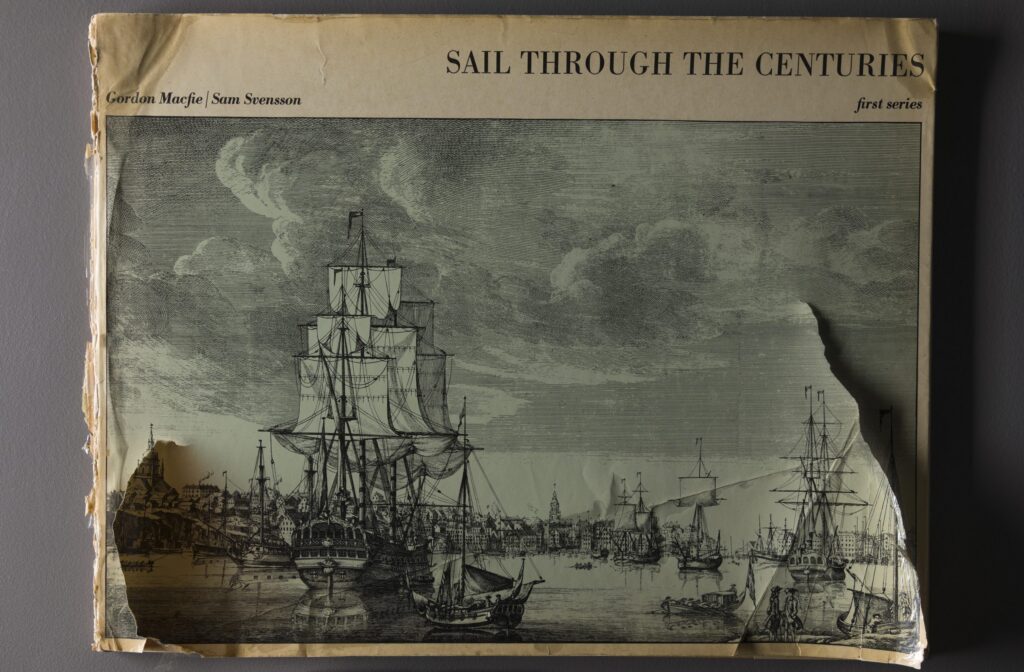
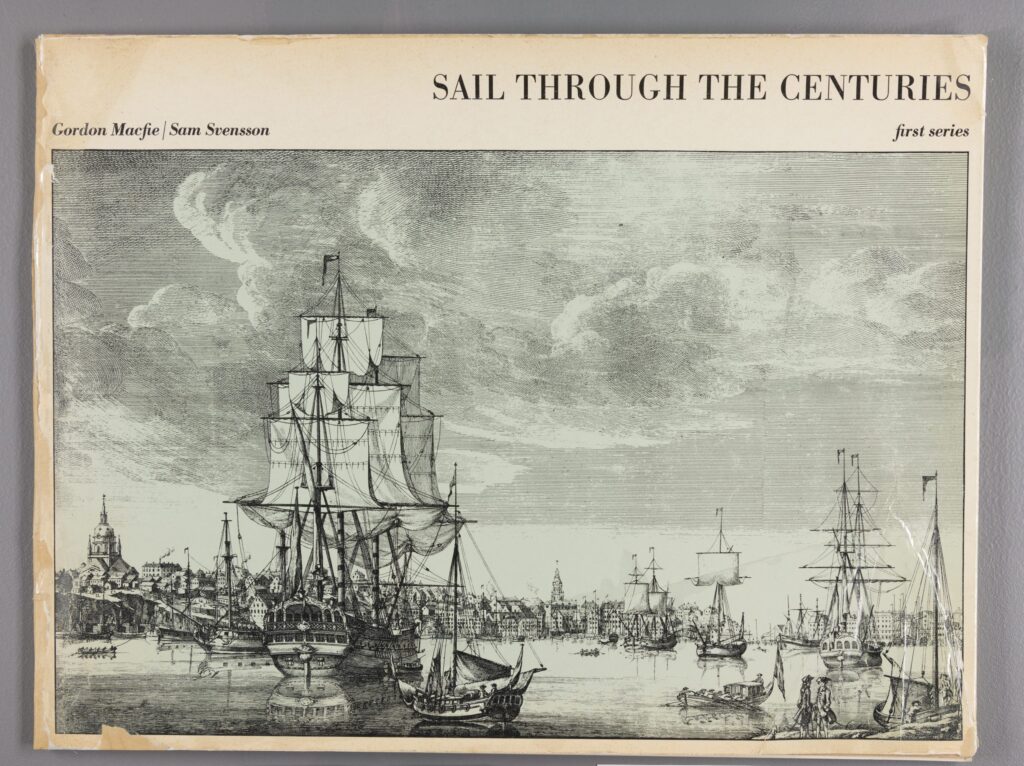
My final project was this book from our library, Sail Through the Centuries (1963). This book had some beautiful depictions of sailing ships throughout the ages inside, but was suffering from significant damage to its front cover. The spine was also missing, and the laminate plastic cover was flaking. During my time here I learned that the conservation of library materials differs from objects. The main goal of conserving library materials is to keep them usable and accessible for our patrons, so the tools and processes used can vary a little bit. So in order for this to be an accessible piece of our library’s collection, I had to remove the cover from the text block, rebind the text, and give the book a new spine.
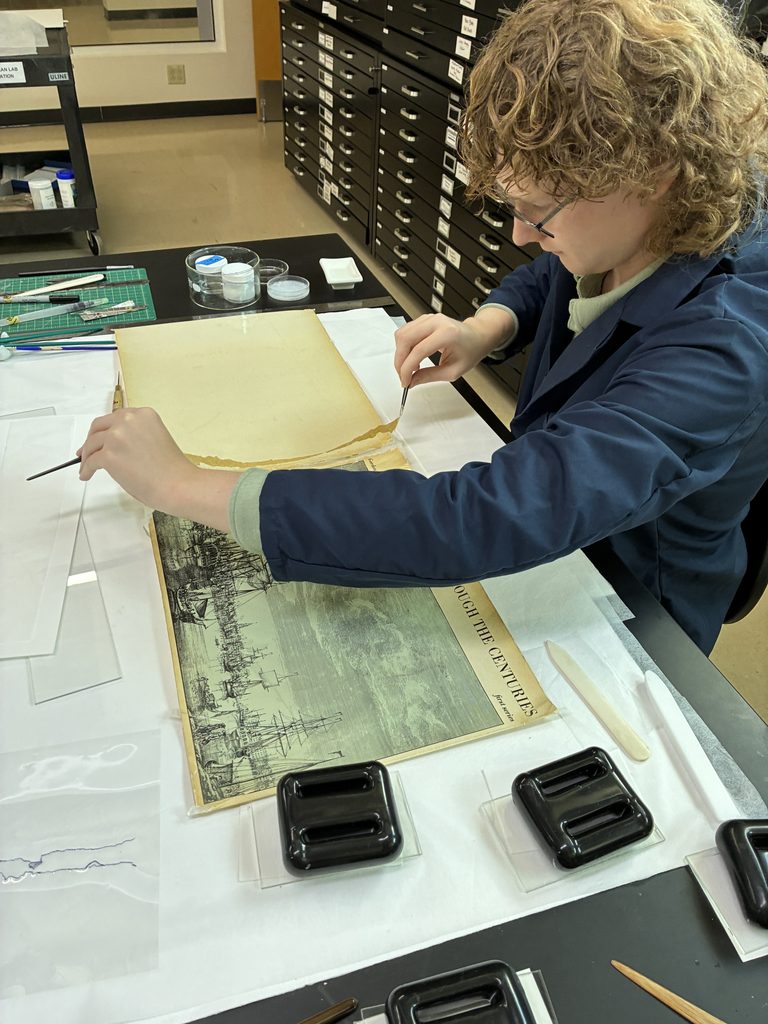
I crafted this “spine transplant” out of a handmade Japanese paper that has much stronger fibers than your average machine-made printer paper. This new spine will be able to withstand more flexing and will hold up much better to use over the years. After this, I mended up the large tears and adhered the laminate cover back down to prevent it from flaking off in the future.
As you can see, I’ve been pretty busy over the past few weeks. This internship was my first professional experience with conservation, and I’m really glad I got to experience it at The Mariners’ Museum and Park.