In museum collections, big problems can come in small crawling packages- sometimes as small as the tip of a pencil- in the form of heritage destroying pests. As humans, many of us tend to instinctively fear big creepy-crawlies with long legs and hairy bodies. But in a museum setting, large insects and arachnids such as centipedes and spiders are often the most benign intruders. In fact, some of the most damaging pests in a collections setting, such as booklice, cabinet beetles, and saw tooth grain beetles, can be as small as 1-3 mm as an adult, and a fraction of that size as a nymph or larva.
As members of the conservation team focused on the preservation of our lovely collection here at The Mariner’s Museum and Park, it’s our job to trap, identify, and track these sometimes microscopic pests to control their entry into the building and mitigate potential damage to collection items. The process of pest control in this context is known as Integrated Pest Management (or IPM).
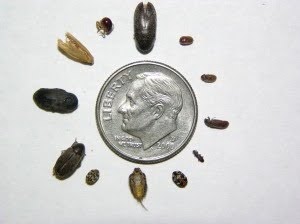
Some common heritage eaters in the US as compared to the size of a dime. Beginning at the top and moving clockwise: cigarette beetle, drugstore beetle, confused flour beetle, saw-toothed grain beetle, carpet beetle, common carpet beetle larvae, varied carpet beetle, common dermestid beetle, larder beetle, webbing clothes moth, American spider beetle, and hide beetle (Image Courtesy of Ellen Carrlee Conservation https://ellencarrlee.wordpress.com/wp-content/uploads/2020/12/agents-poster.jpg)

What are pests really?
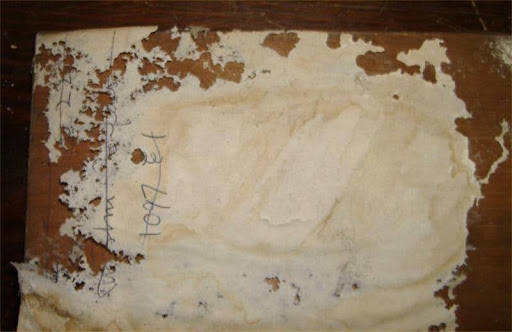
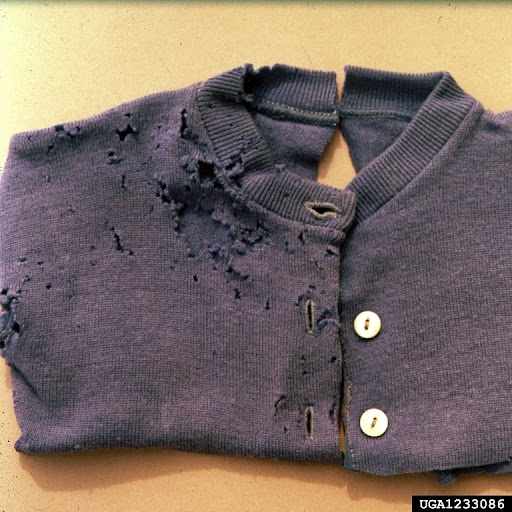
Before diving deeper into the process of Integrated Pest Management in museums, I should first clear up exactly what preventive conservators define as a pest. Pests are defined by the National Parks Service as “biological agents that interfere with the management objective of the site.” So, in the context of museums, this means any organism that feeds on or destroys museum objects. Though this often comes in the form of insects, this can also include rodents, bats, birds and mold. The materials most at risk to damage from pests, especially when improperly stored, are wood, paper, textiles and furs.
Why do small pests cause so much trouble?
Though some heritage destroying pests such as cockroaches are indeed quite large and imposing, small or microscopic pests can pose unique and equally damaging issues in collections spaces. For example, pests can enter a museum space through surprisingly small spaces. The booklouse, which feeds on the starches and mold found in book bindings, averages between 1-2 mm in size. However, because these insects are both soft bodied and dorsoventrally flattened, so wider than they are thick, it’s possible for them to fit in crevices smaller than 1mm tall. Alongside this, if a booklice or cabinet beetle infestation were to occur in a collections space, it may take longer to be noticed than an infestation of larger pests as the booklice or cabinet beetles are much harder to see with the naked eye.
Lets play spot the pest!
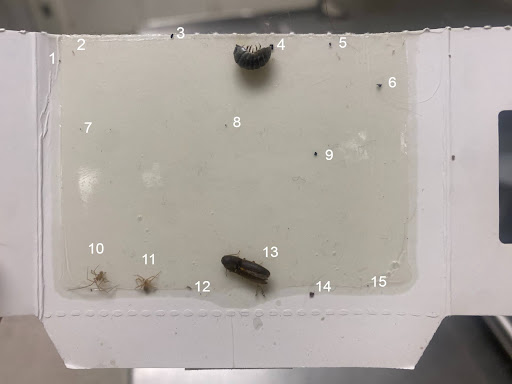
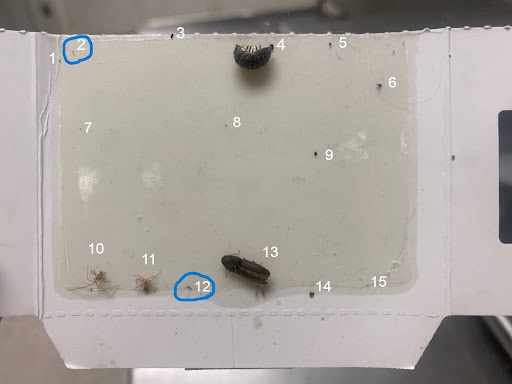
This sticky trap, recovered from a non-collections space in the museum, serves as a great example of how difficult it can be to identify the presence of heritage destroying pests. Can you tell just by looking which of these 14 labeled bugs was hungry for our collection objects? Upon first glance, your eye probably immediately goes to the ground beetle (labelled 13), the isopod (4), or the two spiders (10 & 11). However, these particular insects and arachnids are harmless to our collection, as they have no interest in eating any of our at-risk materials, so they can be disregarded. Identification becomes trickier with the remaining 10 spots, 8 of which are actually not bugs at all, but dust and debris. Did that help you narrow it down? No? Well then, let’s shine some light on the situation using magnification.
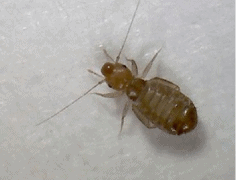
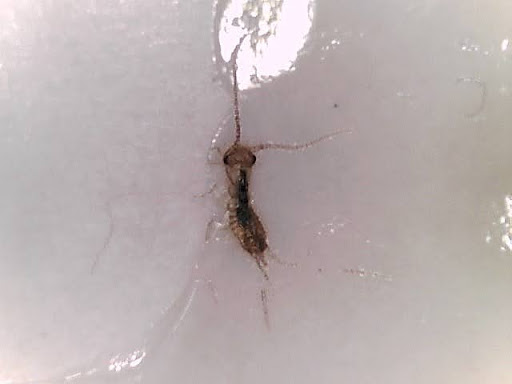
Using a small table top microscope we can now identify that points 2 and 12 are in fact a book louse and a silverfish respectively. Notice how both pests are actually smaller than most of the harmless bits of debris caught in the trap. If these pests were thought to be nothing more than dust and disregarded, a larger problem could quickly be at hand as the insects continue to enter the space and breed.
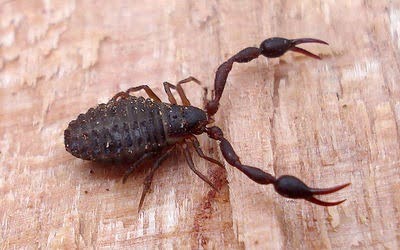
Interestingly, though large non pests such as spiders and centipedes are often harmless to individual objects, their presence can be an indicator of a particular species they prey upon existing in the museum space, which can make them quite helpful for IPM. For example, though it may be difficult for the untrained eye to spot a booklouse on a dark object or trap, the presence of the macroscopic pseudoscorpion (see the image below) commonly known as the book scorpion, can quickly point to the location of a potential entry point or infestation.
Curbing the insect invasion
So if some of the most damaging pests are so small and difficult to see, how does our institution go about managing pest issues in 90,000 square feet of collection spaces? For much of the 20th century, institutions used pesticides on at-risk materials to control pest damage. However, we’ve now learned that many of the heavy metals and chemicals used in these pesticides, such as lead, arsenic, DDT, and naphthalene (moth balls), can be quite harmful to human health, causing both acute and chronic effects. Therefore, in the past few decades the museum field has moved towards a strategy of prevention, focused on controlling museum environments to make them less accessible and habitable for pests in the first place. The preventive approach to pest management is also a more accessible path for those looking to protect their own collections at home.
This method of pest management is multi pronged
- First, physical barriers control pest entry into collections spaces in the forms of seals around doors and windows, alongside the filling of cracks in walls and baseboards. It can take time and a keen eye to identify and manage the cracks and crevices in a space, for, as previously mentioned, pests can enter through gaps as small as 1-2 mm across.
- Temperature and humidity monitoring is vital in all museum spaces, collections and non collections alike, as many pests thrive and breed best in warm moist conditions.
- Quarantining objects and freezing them prior to bringing them into the building prevents pests from continuing to eat that individual object, while also preventing the introduction of pests to other objects in a collections space.
- The removal/monitoring of potential food sources is a continuous but important battle for those carrying out IPM. This step of the process can be difficult when small and microscopic pests are involved, as their food sources often include the starches found in dust, detritus, paper, cardboard, and adhesives- all things found in most collections spaces. However, if an institution is successful in controlling their smallest pests they can also expect to see fewer harmless insects and arachnids, as the food source for these predators inside the building is less viable.
Overall, it would be futile for a museum of our size to attempt to become 100% intruder free, as the natural world has a way of thwarting all such endeavors. However, for the sake of our wonderful and varied collection, it’s important that we take all measures possible to control all pest populations in our spaces, starting with the teeniest tiniest troublemakers. You can do your part as a visitor by limiting the food sources you or your family might carry into the museum, or by implementing pest management practices in your own home to protect your family’s heritage.
Works Cited
Carrlee, Ellen. “Integrated Pest Management Made Easy.” Ellen Carrlee Conservation, 22 June 2010, ellencarrlee.wordpress.com/2009/03/19/integrated-pest-management-made-easy/.
“Identifying Museum Insect Pest Damage.” Conserve O Gram, National Parks Service, Aug. 2008, www.nps.gov/museum/publications/conserveogram/03-11.pdf.
Pseudoscorpions – Soil Ecology Wiki, soil.evs.buffalo.edu/index.php/Pseudoscorpions. Accessed 5 Aug. 2025.
Schalau, Jeff. “Watch for Carpet Beetles.” Backyard Gardener , cales.arizona.edu/yavapai/anr/hort/byg/archive/carpetbeetles2019.html. Accessed 1 Aug. 2025.
“Silverfish Damage inside Book.” What’s Eating Your Collection?, www.whatseatingyourcollection.com/identify?obj=316. Accessed 1 Aug. 2025.
Tracy. “How to Get Rid of Biscuit Beetles & Prevent Their Return.” Merlin Environmental, 1 Aug. 2024, merlinenvironmental.co.uk/blog/pests/how-to-get-rid-of-biscuit-beetles-prevent-their-return/.