When you think about the Halloween season, chances are you think of bats. They’re in our decor, our costumes, and our pumpkin carvings, to name a few. But October isn’t just important for bats because of spooky season; it’s also Bat Appreciation Month!
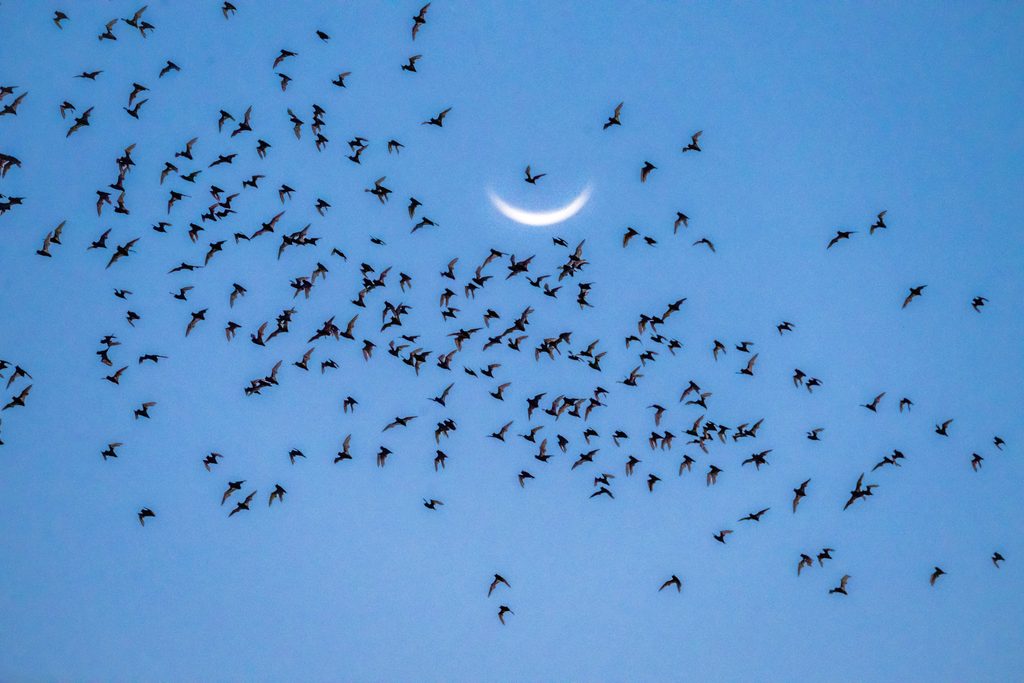
There’s a lot of myth surrounding bats, so let’s dive into some of these beliefs:
#1: Bats will drink your blood.
Only 3 of the 1,400 species of bats globally consume blood: the common vampire bat (Desmodus rotundus), the hairy-legged vampire bat (Diphylla ecaudata), and the white-winged vampire bat (Diaemus youngi). They live in Central and South America, but don’t worry even if you live in or visit those areas! They prefer to feed on wild animals and livestock, and simply sleeping in an area they cannot access prevents bites.
#2: Bats are rabid.
Less than 1% of bats carry rabies, which is much lower than the stigma around being near bats would suggest. While it’s still not advisable to handle bats and any bites should still be treated with caution, they certainly don’t deserve the fear they cause.
#3: Bats are blind and will fly into you.
Bats aren’t actually blind! While their small eyes and lack of some color vision limit what they can see, they make up for this with echolocation. Bats emit a wide range of noises that bounce off of their surroundings and tell them what is around. This is how they navigate and hunt when their eyes aren’t up to the task, especially at night. It’s not only bats that can echolocate: toothed whales, shrews, and oilbirds (Steatornis caripensis) also have some form of echolocation. Any run-ins with humans are rare and accidental.
So what else is true about bats? Most of them eat insects (including everyone’s least favorite insect: the mosquito), though some species will eat fruit, nectar, or small animals. Nectar-eating bats are actually the main pollinators of the agave plant, which is used to make tequila. The world’s smallest bat is the Bumblebee Bat (Craseonycteris thonglongyai) at only 2 grams and a 5-inch wingspan, compared to the Giant Golden-crowned Flying Fox (Acerodon jubatus) at up to 3 pounds and 5 feet in wingspan.
Bat Conservation
While bats are subject to many of the standard threats to our natural world like climate change, habitat loss, and habitat fragmentation, they also have two fairly unique challenges that are causing serious declines in many species. A recent study found that 90% of the North American species assessed have declined in population in the last 15 years.
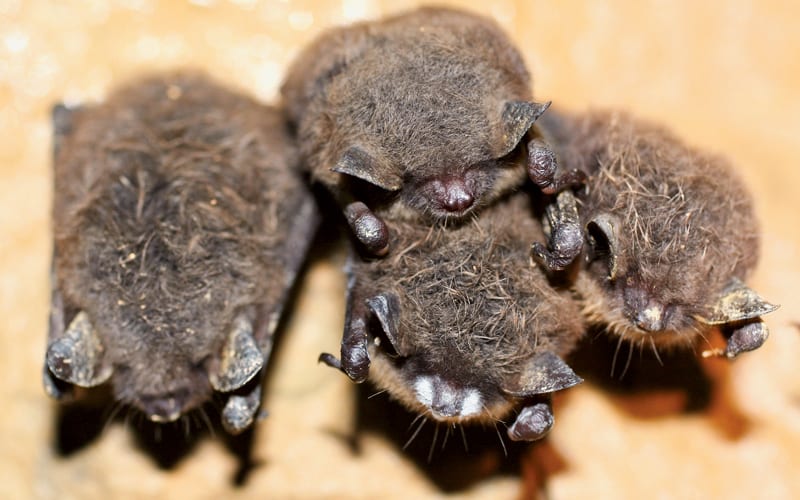
White nose syndrome, which is a fungal disease, was first recorded in North America in 2006. It probably came from Europe, where bats are exposed to the fungus but aren’t affected by the subsequent disease. White nose syndrome generally affects bats that hibernate in caves- the fungus prefers cold, damp environments and jumps from animal to animal in close quarters. Infected hibernating bats tend to be awake and active more often, even occasionally leaving the cave to hunt. This wintertime activity, when there is no food available, burns their fat stores and causes them to starve before spring. Prevention is key because there’s no treatment for this disease yet. Avoiding caves where bats are hibernating is the best way to prevent the spread of the fungus, which can travel on clothing and equipment.
Another major threat is wind energy. While wind energy has massive potential to provide us with sustainable energy, it can also have major effects on migratory flying species- both birds and bats. Bats are most affected while they migrate through wind farms but there is some research that they are also being attracted to turbines by an unknown cause. There are certainly compromises to promote the interests of both conservation needs. One study found that curtailment, which is when the turbine is stopped at low wind speeds, drastically reduces bat mortality. This does reduce the energy produced, so it’s not a perfect solution, but shows that coexistence is possible.
Our Bat Species
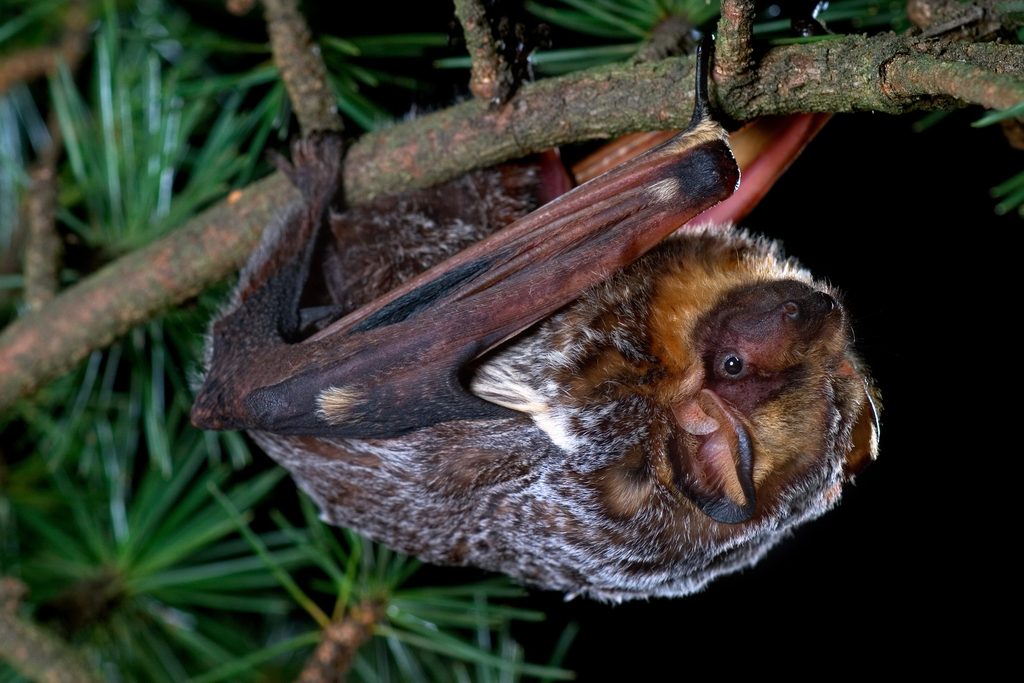
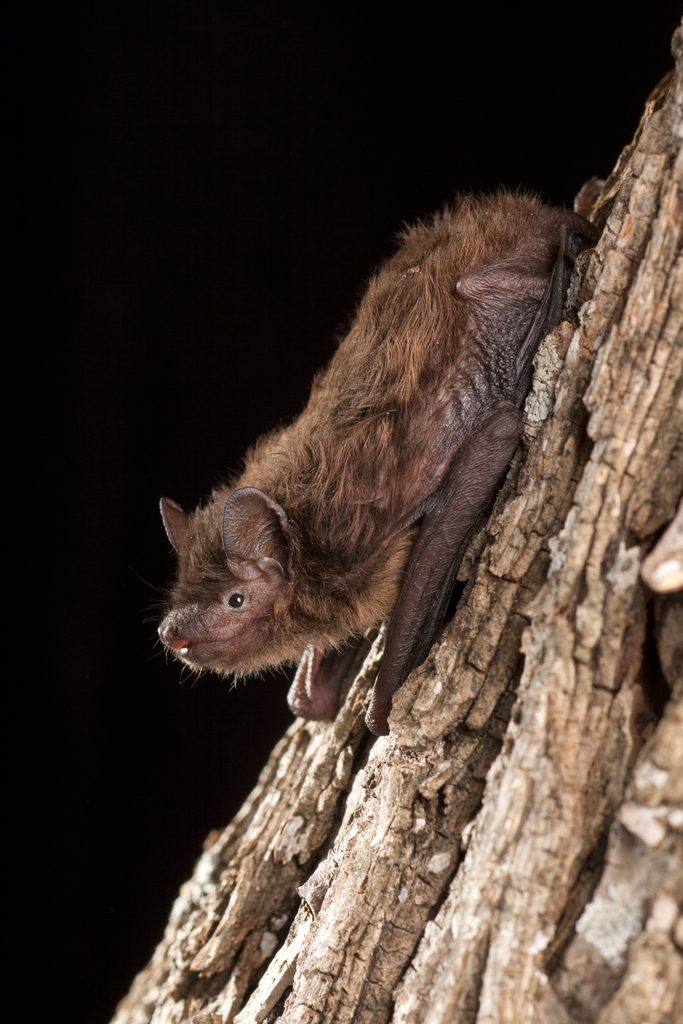
Mariners’ Park is home to at least eight bat species, as recorded by CNU students in 2023 and 2024. The most common were Hoary Bats (Lasiurus cinereus) and Evening Bats (Nycticeius humeralis).
Hoary Bats are distributed across North America and aren’t very well-studied despite being so widespread. Unlike many bat species, they are mostly solitary and roost alone in trees, making them difficult to find for biologists. While they are understood to migrate in the spring and fall, their wintering grounds aren’t clearly defined yet. Hoary Bats don’t seem to be affected by white-nose syndrome because they don’t spend time in caves, but they are the species most likely to be killed by wind turbines. One study suggested that Hoary Bat populations could decline up to 90% in the next 50 years because of this.
Evening Bats are most common in the Southeast US, though their range spreads from Mexico to Michigan. Unlike the Hoary Bat, they live in large colonies of up to several hundred individuals. These colonies most often occur in hollowed or partially-hollowed trees, but they can also make their homes in human-made structures. Evening Bats are also migratory, but their movements are similarly poorly studied. Because they are not threatened by white-nose syndrome or wind turbines to the extent of other species, they are a relatively low-concern species for conservation efforts.
Bats and the WILD Grant
As part of our grant agreement, we’re not doing any tree work during the summer season for the benefit of our bats, particularly those that are federally listed as threatened or endangered. Because they are dependent on forests to roost and raise young in the summer, cutting down dead or invasive trees may disturb them or even kill them.
Our two species of concern are the Northern Long-eared Bat (Myotis septentrionalis) and the Tricolored Bat (Perimyotis subflavus). The Northern Long-Eared Bat was listed as federally endangered in 2022, while the Tri-colored Bat has been proposed to be listed, but is not confirmed yet. The Tricolored Bat was found in past research; the Northern Long-eared Bat is present in the area but not necessarily in the park. But when talking about endangered species, it’s better to be safe than sorry!
Bats won’t just benefit from our work occurring in the correct season. Our hope is that they will also benefit from the increase in native plants in the park and the increased number of insects that they should support. Most invasive plants don’t feed insects the way natives do, and the resulting small population isn’t able to feed as many bats as it should. Bats can eat thousands of insects per night, so they really need healthy insect populations to persist! Our hope is that our bats won’t just be around this Halloween season, but for many spooky seasons to come.
Dive Deeper:
Bat Conservation International: https://www.batcon.org/
North American Bat Monitoring Program: https://www.nabatmonitoring.org/
The State of the Bats in North America: https://nyaspubs.onlinelibrary.wiley.com/doi/10.1111/nyas.15225
Bat Conservation at Home: https://www.nps.gov/subjects/bats/conservation-at-home.htm
Forest Management and Bats: https://research.fs.usda.gov/treesearch/61910