Mariners’ Park has been a birding hotspot for decades, as far back as the original wildlife research done by George Mason in the late 1920s and early 1930s. While Mason only recorded 106 species on the original Museum grounds, our enthusiastic birding community has logged over 200 species in the last 20 years. These range from shorebirds like the Spotted Sandpiper (Actitis macularius) to birds of prey like the Red-shouldered Hawk (Actitis macularius) to migratory warblers like the Northern Parula (Setophaga americana).
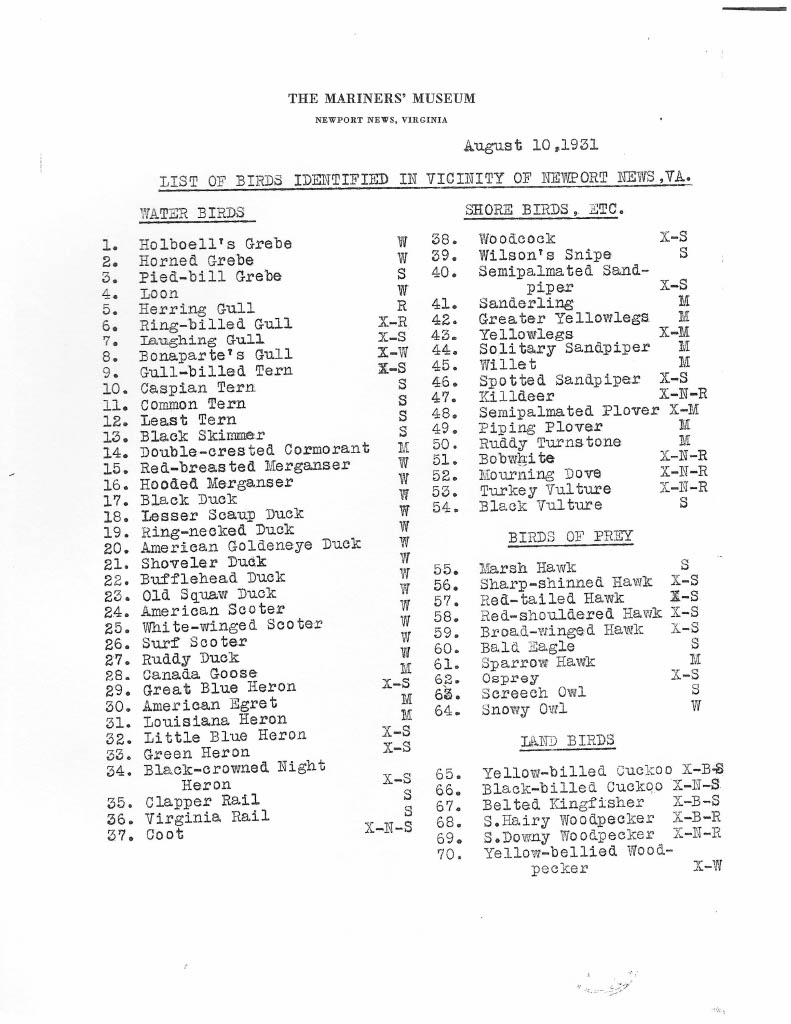
Nearly 100 years after Mason’s pioneering research, bird populations are still a primary focus in our conservation planning at the Mariners’. Our WILD grant project’s full title is “Habitat Restoration, Education, and Outreach Benefitting Imperiled Bird Species in Mariners’ Park.” But why did we decide to prioritize birds for our largest-to-date habitat restoration project?
One of the biggest reasons for centering birds is that they are charismatic! Birds make a great stepping stone into a larger conversation about ecosystem health because, well, humans like them. They’re majestic in flight, they often have bright colors or patterns, and many of them sing beautifully. Another thing that makes birds so appealing is that you can find them pretty much anywhere. People in Newport News don’t generally have cheetah or bison in their backyards, but there’s always going to be a bird or two. Especially living in increasingly urbanized areas, observing birds is often our most accessible way to connect with our wild world.
But birds aren’t just pretty to look at — they’re drivers of ecosystem processes. They are major players in insect population control, with researchers finding that 96% of bird species consume insects at some point in their lives. Not only does this keep insect populations in balance, it also benefits humans. Insects cause billions of dollars of damage to crops every year, as well as spreading some of the most dangerous human diseases. Keeping birds around reduces the need for pesticides and other insect-killing techniques that damage the environment and our own health.
In addition to their role in the food web, birds are also major dispersers of seeds. By consuming seeds and then defecating them in a new location, those plants are able to spread to new areas. Species like birds of prey and vultures provide a similar effect, processing dead animals into waste high in nitrogen and phosphorus. This waste fertilizes ecosystems, making these nutrients available to plant life to start the cycle all over again.
Birds in decline
Unfortunately, bird populations are in decline globally due to myriad factors. A 2019 article in Science found that over the 48-year study period, North American birds declined in total population by 29 percent, or approximately 3 billion individuals. This pattern isn’t uniform across the continent, with Great Plains and grassland species seeing the most significant declines. A lot of this has been attributed to habitat loss, either to agriculture or to human use. But this study wasn’t all bad news! Waterfowl populations have actually increased since 1970, when they were at historic lows due to overhunting. This recovery is because of human conservation efforts like hunting quotas and wetland restoration. If we can bring waterfowl back from the brink, we can reverse the declines we see in other groups, too.
The species in Mariners’ Park also face conservation challenges, with 41 of our recorded species on the Virginia Department of Wildlife Resources’ Species of Greatest Conservation Need (SGCN) list. This list aims to increase awareness of priority species, both for statewide efforts and for independent conservation organizations.
Protecting birds in Mariners’ Park and beyond
So what can we do about these declines? A lot of wildlife population management is controlling habitat factors that allow the species to thrive. For birds, most conservation efforts center around improving food and cover resources.
The kind of foods that birds need varies by species. Osprey (Pandion haliaetus) and Bald Eagle (Haliaeetus leucocephalus) depend on healthy fish populations both in Mariners’ Lake and in the James River to support themselves, while the Ruby-throated Hummingbird (Archilochus colubris) needs nectar from tubular flowers. But the main food needed for many species is insects — one study found that it takes 6-9,000 caterpillars to successfully fledge just one clutch of Carolina Chickadees (Poecile carolinensis). Imagine that number multiplied by all of the birds in the Park!
Insects are in decline globally just like birds, due to a combination of habitat loss and pesticide use. Insects are highly dependent on plant communities to persist, as many of them consume the leaves, sap, nectar, etc. of specific groups of plants. For example, Monarch Butterfly (Danaus plexippus) larvae only eat milkweed species. If there is no longer any milkweed in an area, the life cycle is broken.
We’ve converted a stunning 38 percent of Earth’s land area to agriculture, plus all of the land conversion completed for our cities and other infrastructure. Even in areas that are “natural”, plant communities are often much less diverse than what they used to be. This lack of food for insects has direct negative effects on their populations, which in turn has direct negative effects on bird populations.
Our WILD grant plans to address this issue by removing invasive plant species, which are rarely edible for our native insects, and replacing them with native species that can provide those resources. We hope to increase insect populations, which will in turn increase bird populations.
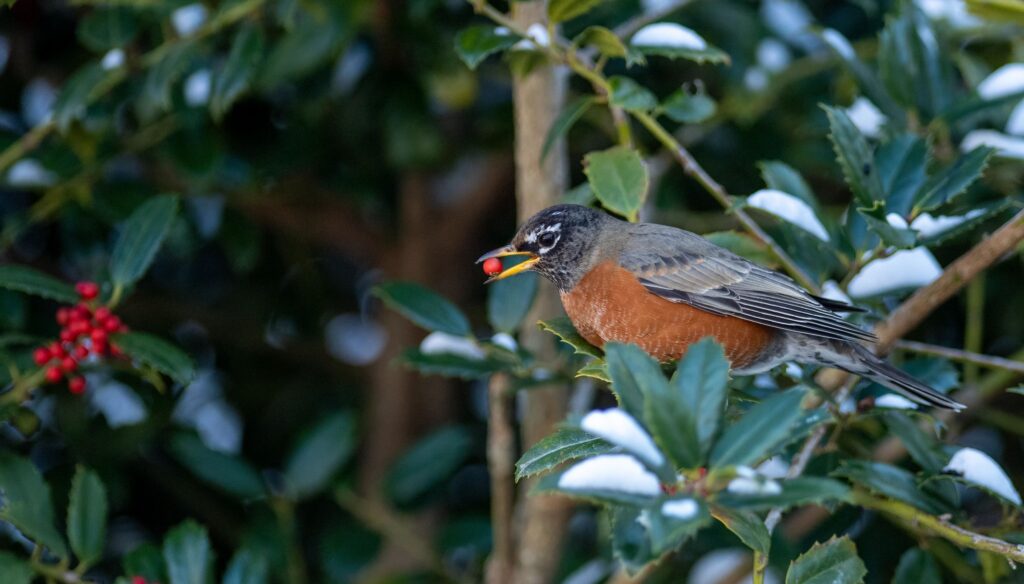
Just like food, cover needs vary by species. For birds, this would generally include places to hide from predators and places to nest safely. Most forest-dwelling birds nest between 5 and 20 feet off the ground, usually in shrubs or saplings. This is high enough to be away from ground-dwelling predators and low enough to be less exposed to the elements.
In many forests in our area, we lack a mid-story layer like this. The combination of White-tailed Deer (Odocoileus virginianus) browsing pressure and invasive plants have made it so that there are limited options for birds to nest in. While a uniform carpet of English Ivy (Hedera helix) may look pretty in December when nothing else is green, it stops native understory plants from growing and does nothing to provide cover.
We will be planting over 1,000 shrubs and understory trees in the restored sites once they are cleared of invasives. As they grow and the forest regenerates itself, the forest understory will be much more complex and provide many more cover resources for the birds we are trying to protect.
These aren’t just efforts that a large urban park can implement! Whether you have a few pots on your balcony or 100 acres, what you choose to do with your space can have impacts on local bird populations. Planting species that are local to your area will always be the best option. In very small areas, adding a few flowering or fruiting plants can bring birds in to feed. In slightly larger areas, planting a combination of trees, shrubs, and flowering plants creates the diversity in habitat structure and resources that allow birds to thrive. Many plant nurseries provide suggestions for planting based on location, benefit to birds and insects, and soil, light, and water characteristics of the land if you want more guidance. Native plants, by and large, are actually less resource-intensive and easier to grow than other ornamental plants! By all working together to improve our urban habitat, we’ll provide the resources needed to ensure birds are around for future generations.
*This project was made possible by the National Fish and Wildlife Foundation WILD grant.
Dig deeper!
https://www.birds.cornell.edu/home/bring-birds-back/
https://dwr.virginia.gov/wildlife/wildlife-action-plan/species-of-greatest-conservation-need/
https://www.nytimes.com/2015/03/11/opinion/in-your-garden-choose-plants-that-help-the-environment.htm