This website stores cookies on your computer. These cookies are used to collect information about how you interact with our website and allow us to remember you. We use this information in order to improve and customize your browsing experience and for analytics and metrics about our visitors both on this website and other media. To find out more about the cookies we use, see our Privacy Policy.
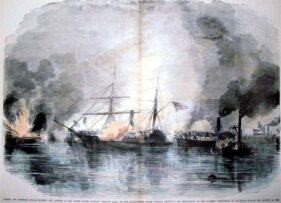
After the Battle of Hampton Roads, USS Monitor gained the title of "The little ship that saved the nation". The ship's newfound fame set off a "Monitor Craze" in the US, as hosts of vessels emerged with the same name.
Major General John Bankhead Magruder arrived in Texas in late October 1862 and immediately sought to regain the laurels he had earned on the Virginia Peninsula.
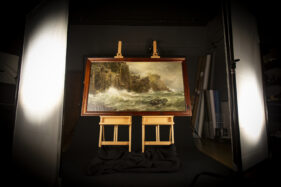
This 1884 oil on canvas simply titled “Coast of Cornwall” by William Trost Richards, captures this complex moment where sea meets shore. In this seascape, there are no people, no ships, no record of time to detract from this moment. Richards
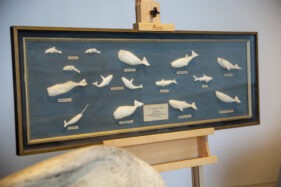
Remembering a Moby Dick read-a-thon and whaling display with a school group, a program that brought literature and history to life. Visitors got to listen to the book’s narrative while seeing authentic pieces from our Collection.
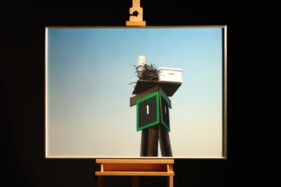
The title of this work, “Marine Totem with Osprey Nest”, carries a reverence. The idea of a totem invokes a spirituality, rooted in the indigenous belief of humankind’s kinship with nature. More secularly, this concept describes something that acts as a respected symbol.
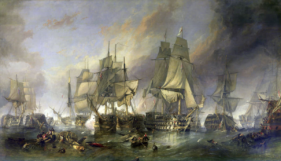
Major changes to 19th-century seaboard weaponry forced the transition from wooden ships to armored vessels. By the dawn of the 20th century, every major warship would be made of steel – steam-powered and armed with rifled guns – a new way of waging war at sea.
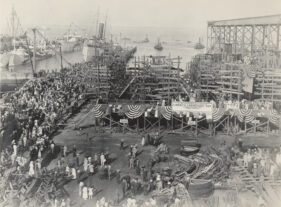
In less than 60 years after the end of the Civil War, the city of Newport News was internationally known as a shipbuilding center with excellent port facilities.
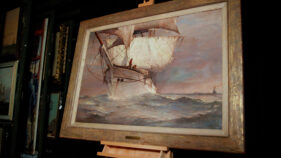
A mariner, through and through, the artist John Alexander Noble (1913-1983) devoted his life's work to the capture of scenes of mariners at sea, shipping, salvage, and decay. But of all of the ships he captured, in various phases of their life and death, it was the Spanish Bark, Guadalhorce, that he seemed to favor above all others.
Ships can be repurposed in many ways, some become museums, some get scrapped for parts. Dive into some of these ships and how their stories continue today!